Ukraine’s dual pushback
Russia’s army has faced the risk of getting encircled on its most critical positions near Kharkiv within few days. Why were the troops unprepared for a tough fight?
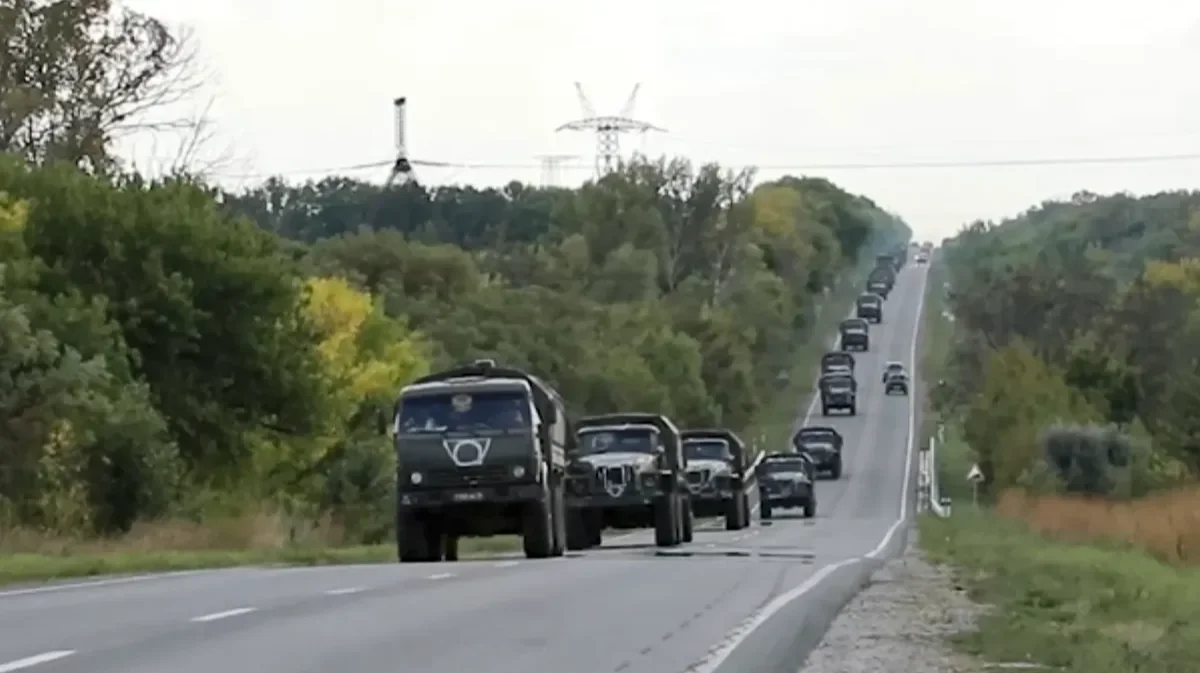
Ukraine’s counteroffensive in the regions of Kherson and Kharkiv has marked the start of a new chapter in this war, and its potential outcome could barely be predicted. However, there are some patterns that can be detected over a short-term horizon. To understand those patterns, one needs to take a closer look at two areas: Russia’s foothold on the west bank of the Dnipro river in the Kherson and a triangle between the towns of Balaklia, Kupiansk and Izium in the Kharkiv region. Ukraine’s army has managed to re-capture over 1,000 km² of their land between 1 and 8 September, liberating dozens of settlements from Russia’s occupation, according to their official statements. Russia’s deployment of more than 10,000 soldiers near Izium, whose objective was to capture Sloviansk and approach Kramatorsk, is now running the risk of getting encircled.
But the main thing is that de-occupying Balaklia opens up potential for re-capturing Kupiansk and Izium, two strategically important cities that play a key role for the transport routes in the region.
Firstly, Russia’s forces in the area were mainly police-like units of the National Guard who had been unprepared to real combat
Russia still has its reinforcements, so further Ukraine’s advance may stall or even stop in the nearest future.
Potential routes of Ukrainian advance
Ukraine reported that its army had breached the first line of Russia’s defence and started its offensive on the west bank of the Dnipro on 29 August, a few days before Balaklia was re-captured. Ukraine’s counteroffensive in the south has been relatively successful so far: the country’s flag was raised again in Vysokopillia, an important locality on the north-eastern flank of Russia’s foothold. And, what’s also important, Ukraine’s forces moved about 10 km further down south towards the town of Beryslav, located on the bank of the Kakhovka Reservoir.

Ukraine’s offensive here in the south is a slow-going thing, unlike what’s currently going on in the Kharkiv region. Russia’s army has created three lines of defence here with multiple concrete formations and minefields. Breaching this defence is impossible without lots of heavy weaponry, namely heavy-caliber armaments and armoured vehicles, and might cause huge losses, which Ukraine finds unacceptable. Therefore Ukraine’s General Staff is supposedly counting on protracted warfare here, draining Russia’s munitions, fuel, and other equipment necessary for combat. For this, Ukraine has destroyed all permanent bridges over the Dnipro in the region and are now holding all pontoon crossings at gunpoint. As a result, Russia’s 25-30 thousand group of forces is now trapped. Its supply lines are seriously crippled and may be soon minimised, so, its war-making capacity will decrease each day, which will eventually force them to either surrender or evacuate to the east bank. Such a rout will have harsh consequences for Russia’s military and specifically political activities.