Phoning it in
Despite ambitious guidelines from Moscow, Russian schools have been going through the motions to mark Victory Day
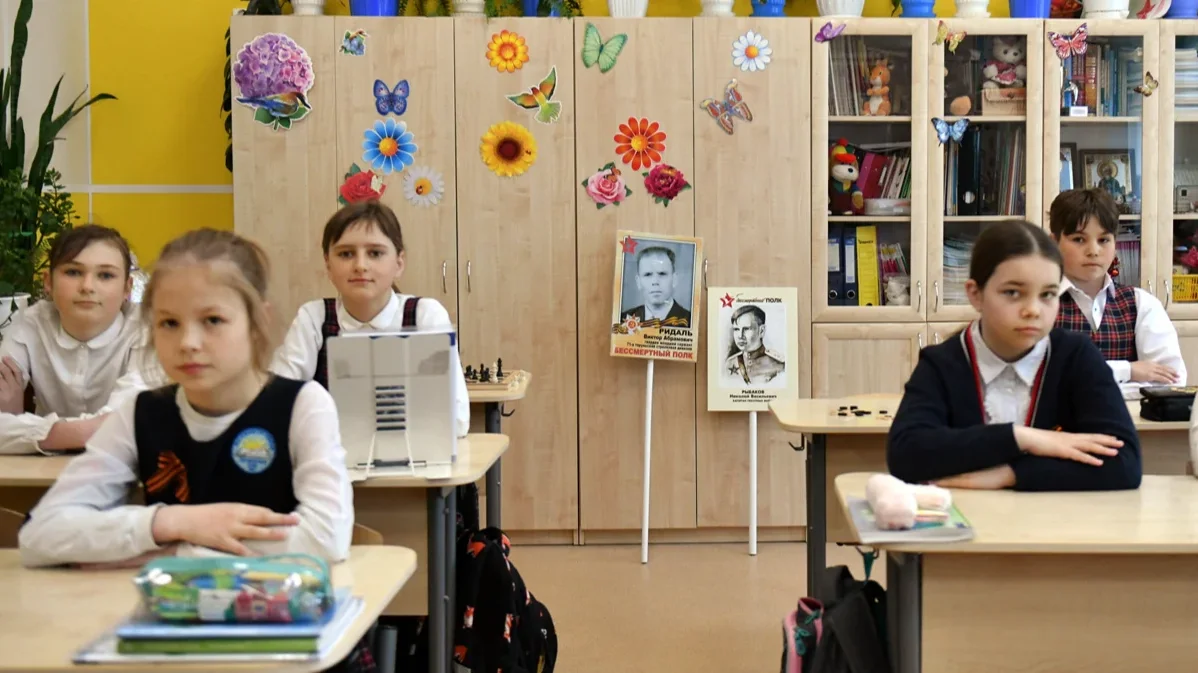
In the third year of Russia’s full-scale war against Ukraine, the focus of Victory Day — 9 May, when Russia traditionally celebrates the defeat of fascism in World War II — is increasingly shifting towards the current war in Ukraine. This can clearly be seen in this year’s school guidelines issued by the Education Ministry, which encourages schools to invite a “hero of the special military operation” to speak to pupils, to hold a so-called Immortal Regiment parade to honour World War II veterans, or to write letters to soldiers at the front.
The Immortal Regiment guidelines also recommend, among other things, referring to the experience of “participants in the special military operation”, either by inviting them along to speak or, in the case of those who died, telling their story on their behalf.
“Our class isn’t taking part, though. We don’t want to,” she says.
“It looks like everyone will only wear them on 9 May,” he said.
“There were some veterans and an old man born in 1941 who talked about fascism for a couple of minutes,” said Feofan. “And at the end of his speech he said that fascism had survived to this day.”