Prosecutors in Sweden filed criminal charges against the captain of a Russian “shadow fleet” vessel on Monday, after the ship was boarded and impounded by Sweden’s coast guard on Friday as it sailed through Swedish waters.
According to Swedish broadcaster TV4, the charges against a Russian citizen arrested on board the cargo vessel Caffa relate to “gross misuse of false documents, violation of maritime law, and violation of ship safety law”. The ship has also been ruled unseaworthy by the Swedish Transport Agency, which means it cannot leave Sweden until appropriate safety measures have been taken.
Senior prosecutor Adrien Combier-Hogg, who is leading the investigation, told TV4 that the Caffa’s Russian captain presented several certificates and documents that the Swedish authorities suspected of being forged during their search of the ship. “We are now interviewing the suspect and others involved, and reviewing the relevant documents,” he said.
The Russian Embassy in Stockholm confirmed on Sunday that it was “in contact with the relevant Swedish authorities,” and would provide consular assistance to the Russian members of the Caffa’s crew “if necessary.”
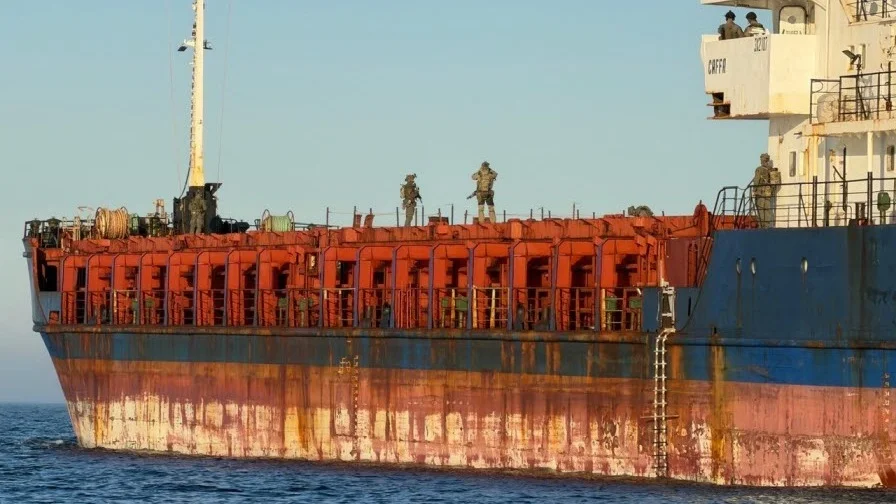
The legal proceedings are the result of a Swedish operation on Friday evening codenamed Svart kaffe (Black Coffee), in which the Swedish Coast Guard and a Swedish Police task force boarded the Caffa as it sailed past the southern city of Trelleborg. Images released by Stockholm showed a helicopter and several soldiers landing on board the rusting ship, which it identified as the Caffa.
The Russian-linked vessel was travelling under a false Guinean flag, and sailing with a cargo of grain from the Moroccan port of Casablanca towards St. Petersburg, The Moscow Times reported, adding that a majority of its 11 crew members were Russian nationals.
At a press conference on Saturday afternoon, Daniel Stenling, deputy chief of operations at the Swedish Coast Guard, said that Sweden had acted on information that the Caffa was “present on the Ukrainian sanctions list, where it is alleged that it has been transporting grain stolen from Ukraine.”
Since the start of the war in Ukraine in 2022, Russia has been relying on a clandestine network of so-called “shadow fleet” tankers, with murky documents tracing ownership, registration and insurance, to keep shipping costs down and evade international sanctions on Russian exports and imports.
A growing number of Russian-linked ships have been seized by Western governments over alleged safety violations in recent months, including one oil tanker seized by the Belgian Navy only a week ago.