Bird of prey
Serbian authorities attempted to ban a Russian anti-war activist from entering the country. What does this mean for Russian exiles in Serbia?
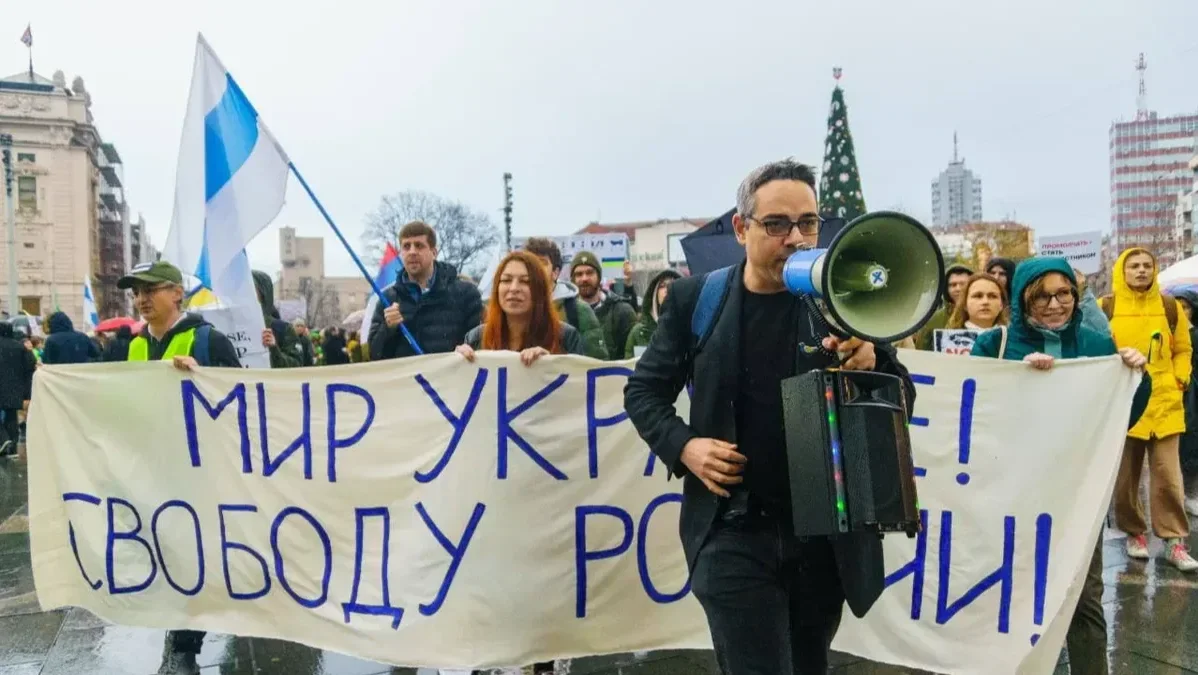
Following the Russian invasion of Ukraine, Serbia has become one of the main destinations for Russians fleeing the country. Among the emigres are political activists who opposed Vladimir Putin’s regime and his decision to invade Ukraine. So far these people could feel safe: no Russians were punished for their political stance in Serbia, unlike in Georgia or Kyrgyzstan, for instance.
This changed on 13 July when Peter Nikitin, an anti-war activist who organised anti-Putin rallies in Belgrade, was not allowed to enter Serbia. Although he was eventually let into the country, the faith in Serbia as a safe haven for anti-war Russians cracked.
In his exclusive piece for Novaya-Europe, Aleksandar Đokić, a political scientist, has explained why Serbia’s authorities attempted to bar Nikitin from entering the country, why they eventually changed their mind, and how the activist could have fallen prey to major political developments in Serbia and the Western Balkans.
Christopher Hill, the US ambassador to Serbia, has explained that the US is aiming to improve the relationship with the Balkan country as the relations between Belgrade and Pristina are also changing, but the obstacle is Vulin, i.e., the Russian influence.
Milivojević issued a statement, blaming the situation on Vulin’s agency to which he referred to as “the core instrument of Aleksandar Vučić’s anti-European policy”.
Nikitin and his lawyer say the entry ban was introduced due to Russia’s involvement. This does not sound entirely convincing as Nikitin failed to unite enough activists and Russian emigres around himself after a year and a half of the Ukraine war to attract some real attention from the Kremlin. Moreover, Nikitin is a Dutch citizen, and there are no charges of any kind against him in Russia. In his own statements, he did not accuse Vučić, but emphasised that he was being persecuted by Vulin and Putin together. This, along with the support of Serbia’s liberals, was the right strategy: the entry ban was waived and Nikitin was allowed to enter Serbia.
No threat
In reality, the most likely explanation is that Serbia’s authorities wished to take it out on someone after the US had imposed their sanctions against Vulin in order to show off their power to the nationalist and anti-Western voters.
Nikitin appeared to be the perfect prey: an average Serbian citizen has no idea who the man is, but at the same time, he is a national of a Western country, has been involved in political activism for years, is a critic of Putin, and has attended anti-government rallies in Belgrade. Obviously, Serbia’s authorities did not expect the entry ban for Nikitin to stir so much noise in the media, and after this happened, they made a U-turn, expecting everyone to forget about the incident after a bit of time.
Nikitin’s case actually proves that Russian nationals and political activists who reside in Serbia are hardly in any serious danger of political persecution.
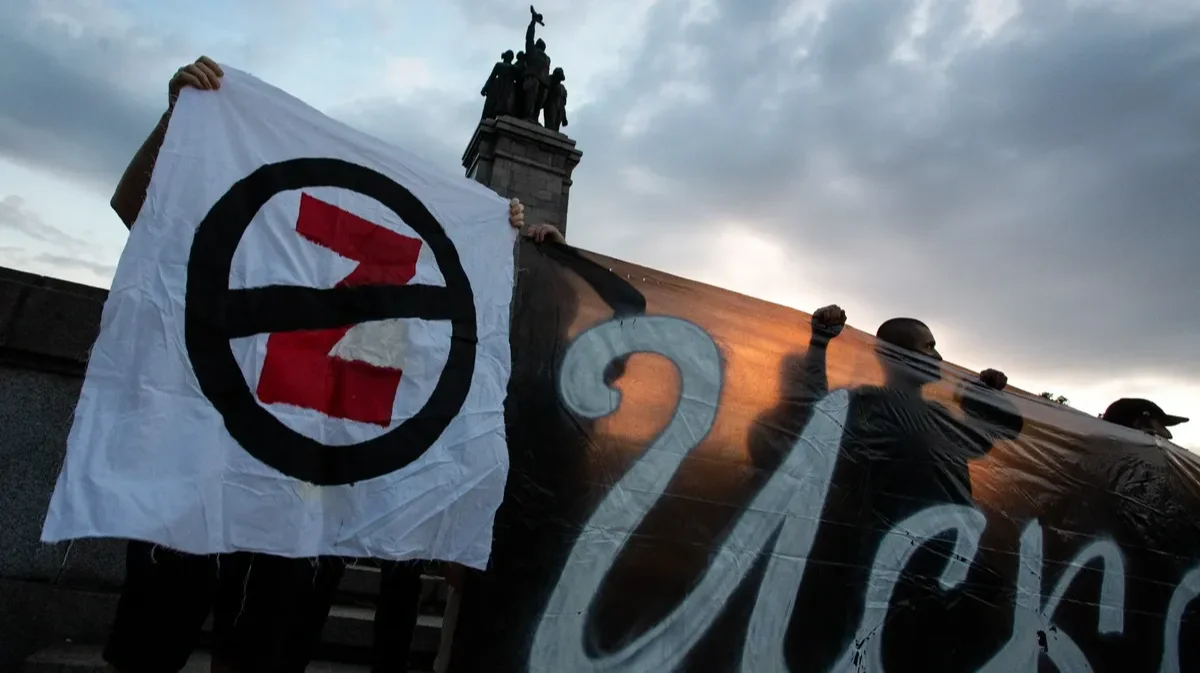
The Serbian authorities are playing a double game: they do not hinder people from arranging anti-war rallies for the sake of good relations with the West, and they also do not interfere with the pro-Putin rallies, arranged by Serbian nationalists, in order to attract their voters.
Since the Serbian leadership can neither cut ties with the West nor its voters, it is going to go ahead with this strategy in the future as well.