Made in Eurasia
The EU used to be Russia’s biggest trade partner for many years. It was replaced by China and Belarus after the Ukraine War had started. Research by Novaya-Europe
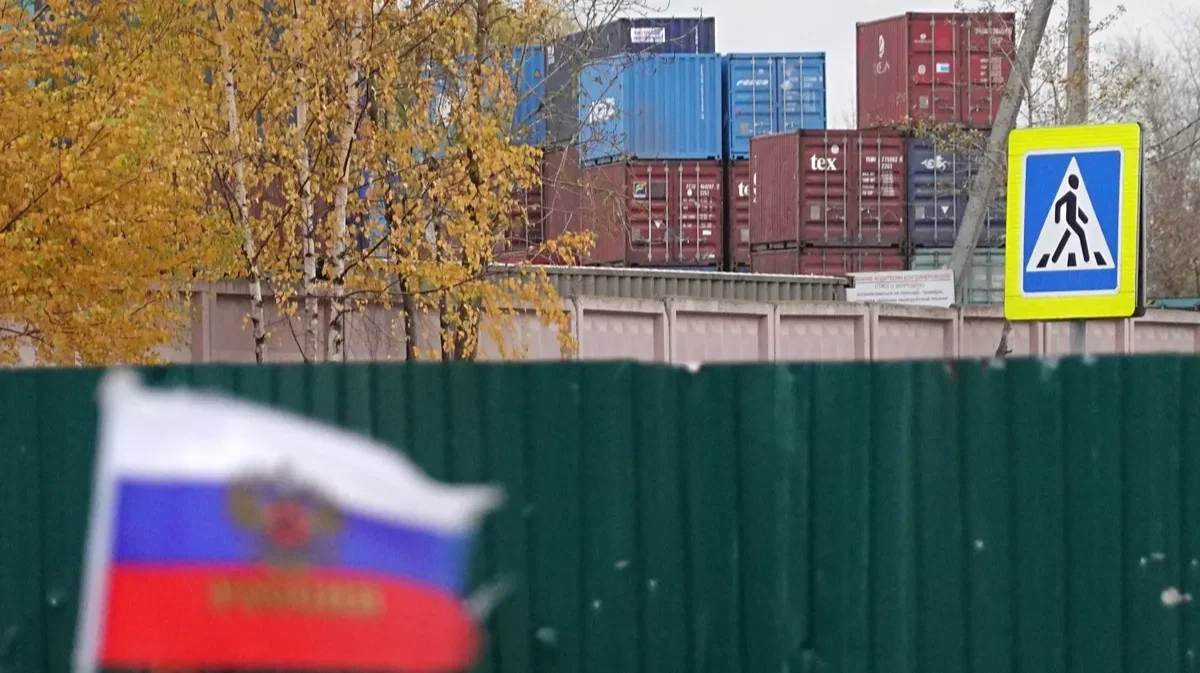
Russia has almost returned to the pre-war imports level after a sharp decline in February. The EU has been substituted by China and the Eurasian Economic Union (EEU) countries, while the US has been replaced by Turkey.
However, the sanctions are still something to reckon with. At this point, the “friendly” countries are nowhere near providing the same supplies level of equipment, transport, and raw materials.
Russia’s Federal Customs Service classified the statistics on foreign trade after the Ukraine War started, so Novaya-Europe’s data department has collected statistics on 45 countries that are Russia’s biggest trading partners independently. Our graphs show how the country’s imports have changed.
What’s so bad about a drop in imports?
- The lack of components and raw materials may lead to production shutdowns, bankruptcies, and rising unemployment. For example, AvtoVAZ, Russia’s automobile manufacturing giant, suspended production in April as it was not receiving enough components. Pharmaceutical companies faced challenges, too.
- Logistics companies, ports, wholesalers, and retailers are in trouble.
- This is a forced reduction in consumption. Russia is experiencing a shortage of automobiles and non-food goods, such as clothing, furniture, and sports items. People see no replacement for their favourite brands that have left Russia yet. The decline in demand affects trade, logistics, and money lending.
- Manufacturing stops its development and modernisation.
In total, only according to the data of the countries we researched, the imports decreased by 28%, or by $41 billion between March and September.
Our methodology
We have collected data on imports of goods to Russia from 45 countries. These are member states of the European Union and Eurasian Economic Union, as well as all the countries that accounted for more than 0.5% of Russia’s imports in monetary terms in 2021, using stats by Russia’s Federal Customs Service. The two exclusions were Vietnam (1.67% of Russia’s imports in 2021) which only has stats up to July 2022 publicly available, and Uzbekistan (0.58%), the country that does not publish data on its exports by country. In total, the 45 countries we selected accounted for 89.7% of all Russia’s imports in 2021.
To get the estimated imports level starting from February 2022, we divided the total exports data from 48 countries by 0.897.
Eight countries increased their exports to Russia after the Ukraine War started, our calculations say. Those include China, Turkey, and the countries of the Eurasian Economic Union, namely Belarus, Kazakhstan, Armenia, and Kyrgyzstan. Uzbekistan is also among the countries in question although it did not make our list of 45 countries due to incomplete data.
The only European country to have increased exports to Russia is Slovenia, mainly because of its medicines and chemicals. Moreover, Latvia exports exactly as many goods to Russia as it did before the war. The country actively supplies drinks, equipment, and medicines to Russia.
Imports from the remaining 37 countries have dropped, with most countries decreasing their exports to Russia more than by half compared to the pre-war figures.
The EU economy is 60 times larger than the EEU economy if Russia is excluded. However, the amount of goods Russia imports from the EEU countries may soon surpass the EU supplies volume.
Since March, Belarus has been the second biggest exporter of goods to Russia after China. Goods worth over $2 billion are being imported into Russia from Belarus now. Armenia increased its exports to Russia by 140% this year, Kazakhstan’s supplies increased by 13%.
A true glut of sales of washing machines, refrigerators, and even electric breast pumps has been observed in Kazakhstan and Armenia. It is most likely that all those goods are eventually being transported to Russia.
Turkey’s exports to Russia have also surpassed $1 billion for the first time in history. It now claims the number three spot in the leader board of countries Russia imports most goods from.
Last year’s volume of exports to Russia from Turkey was close to the import of goods from the United States. However, it is 13 now times bigger: the US exported $90 million worth of goods to Russia in September, while Turkey exported goods worth $1.1 billion.
The biggest substitution was between Russia’s biggest trade partners, namely the EU and China. China first went ahead of Europe in terms of supply volume to Russia in April. Russia’s imports from China have increased by 13% in total between January and October 2022.
The EU did the opposite, drastically reducing supplies by almost 40% since the start of 2022. The biggest Union members, such as Germany, France, the Netherlands, Poland, and Italy have decreased their exports to Russia.
And finally, the most problematic sector is imports of investment goods, that is, equipment and machinery (in total, this was almost 20% of all imports in 2021).

Germany approves nuclear fuel expansion involving Russian atomic agency Rosatom
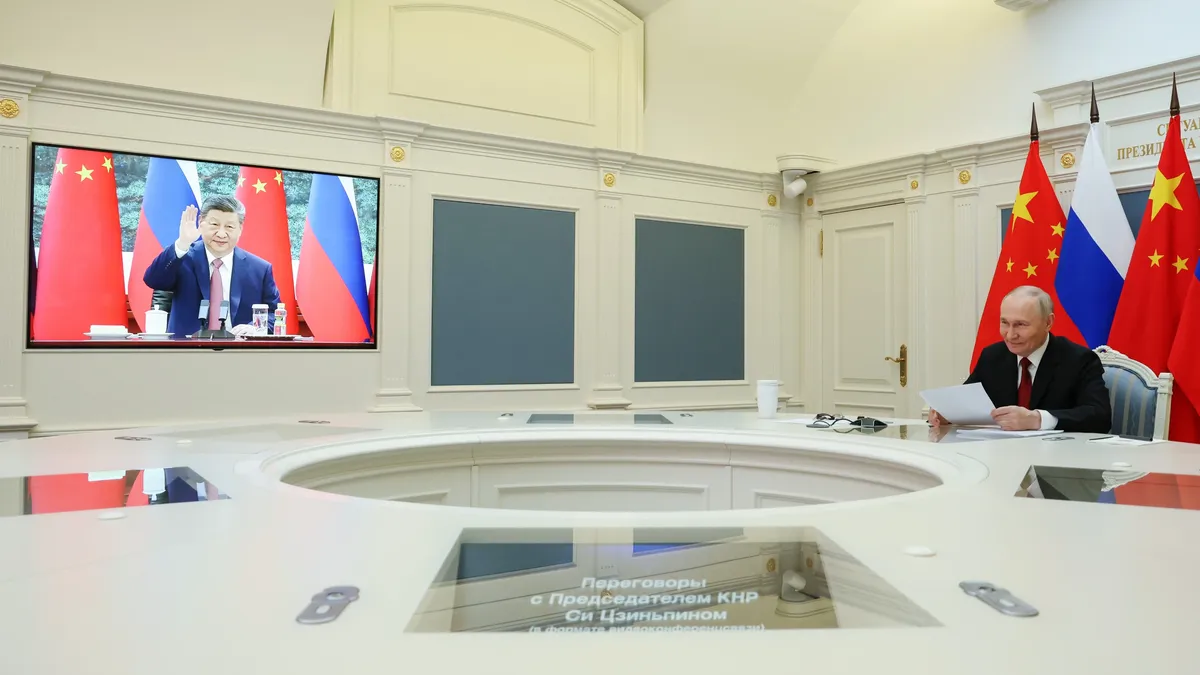
Putin attempts to shore up energy exports to China in call to Xi as India ‘agrees’ to stop buying Russian oil
Russia mulls legalisation of online casinos in desperate search for fresh tax revenue to fund war
Scraping the barrel
The Kremlin is facing a massive budget deficit due to the low cost of Russian crude oil
US investment fund attempts to recoup tsarist-era debt using frozen Russian assets
EU lowers price cap on Russian oil as shadow fleet continues to flout international sanctions
Report calls out EU ‘complicity’ in funding Kremlin war machine as imports of Russian LNG rise

Russian-held Telegram bonds worth $500 million frozen due to Western sanctions
Double whammy
Could sanctions and drone strikes lead to the collapse of Russian oil production and end its funding of the Kremlin’s war machine?