‘We pray that Russian soldiers go back to where they came from’
The Kherson diary. Residents of Dnipro River’s east bank, still occupied by Russia, are waiting for arrival of Ukraine’s army

The liberation of Kherson on 11 November made many shed a tear. Some were crying happy tears, some — angry ones. Meanwhile, the residents of the Dnipro River east bank were also crying out of envy — they are also dreaming of freedom.
Usually, our diary entries feature the residents of both banks of the Dnipro River, but today, there will only be voices of those who continue to live under occupation. While abandoning the west bank, Russian occupation troops blew up all significant infrastructure objects, including all bridges, even pedestrian ones, electrical substations, a TV tower, and cell towers.
The city of Kherson, located on the west bank of the Dnipro River, has been without power and communication since 9 November. Sometimes, there is some mobile coverage in the city centre, but people have to run around in order to be able to catch it. The best one can hope for is get a couple of seconds in to tell their relatives they’re alive.
While power and communication are being restored in the city of Kherson, everything seems to be working, although with outages here and there, on the east bank of the river, which is still under Russian control. Our protagonists, people who live on the east bank of the Dnipro River, describe another week of existence under occupation.
The civilian [“administration”] closed everything down. Then the military showed up, coming out of the forests or wherever they were hiding to buy some food. They started to run around the city in shock: why is everything closed?
They haven’t even heard about the order of the “authorities”.
Sometimes I look at the soldiers and realise that they themselves are at a loss, they have no idea what’s going on.
Robberies have become more frequent in the city. Russian soldiers steal everything they see. They took office equipment and furniture from the city’s administrative buildings. They stole everything they could from the school too, and the rest they broke. In general, they go around the city on the lookout for something else to steal, I guess, so we try to stay as far away from the invaders as we can.
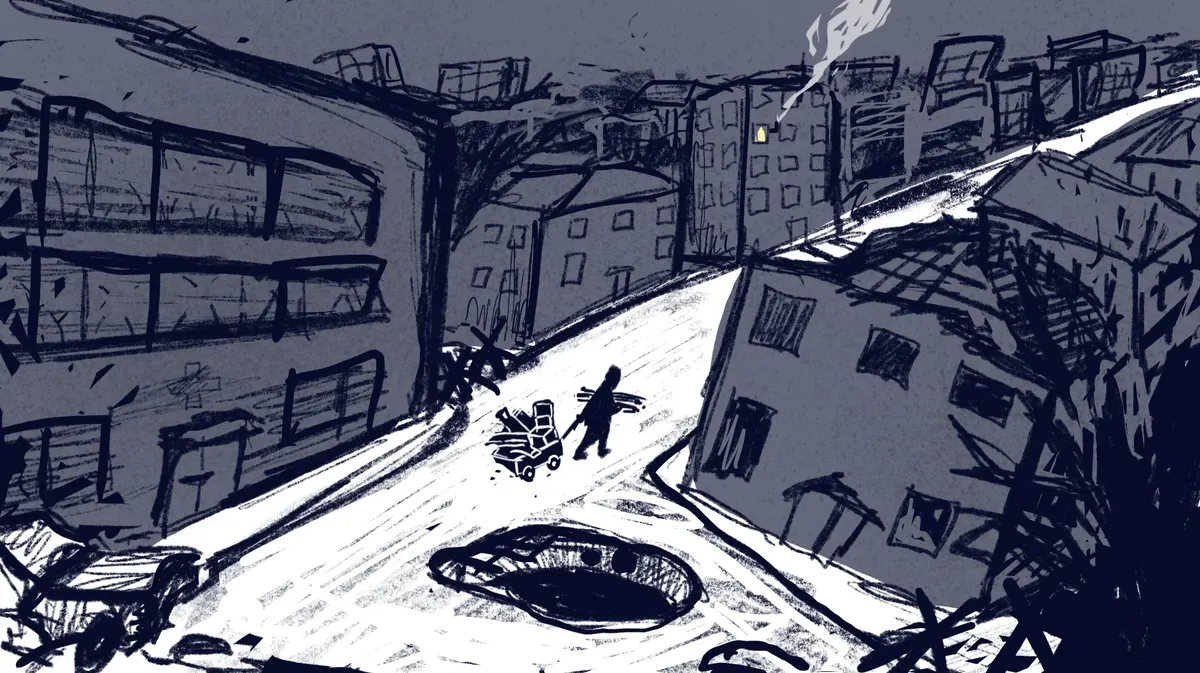
‘I hope that Ukraine’s Armed Forces won’t bomb our homes’
Pavlo, 76. The city of Hola Prystan
Why am I so unhappy? What’s there to be happy about? The residents of Kherson can have their fun for now, but we’ll see who has the last laugh. TV hasn’t been working for several days, radio too. There’s access to the Ukrainian Internet now, so I use VPN to watch the actual news, like 60 minutes [Russian propaganda show — translator’s note].
I’ve got nothing but trouble because of these Ukraine’s Armed Forces; the administration has left Hola Prystan. To get money, you have to get to [the city of] Skadovsk somehow, which is 60 kilometres away. And you have to find a way to get there, too. Ukraine is paying me a pension, but I can’t pay with my [Ukrainian] card anywhere. So, I’ll be looking for a way to go get a Russian pension.
I won’t be leaving the city for anywhere else, I’m too old now, and my health isn’t as it once was. I hope Ukraine’s Armed Forces won’t bomb all our homes.
My wife and I wrote to different volunteers asking for help getting medicine, but as of now, no one is able to come to our city. I don’t know what to do.
The cafes are open, we bought an ice cream each — so delicious. We didn’t risk sitting down in the cafe, what if we ended up spending all our money there? We bought the medicine we needed at the pharmacy, although for some reason, it costs twice as much compared to a month ago. But what can you do, we had to buy it.
We’re not planning on leaving. What will we do with our elderly relatives? They won’t survive a long journey. But still, I packed a bag with necessities, in case the shelling gets worse.
If that happens, we will go to the village where our friends live, they will house us and our granny and grandpa, they have enough space. And if the power goes out, we also won’t be staying here — we’ll freeze, everything in our flat works on electricity. In general, it’s very scary out here, but for now we will see what’s going to happen next.
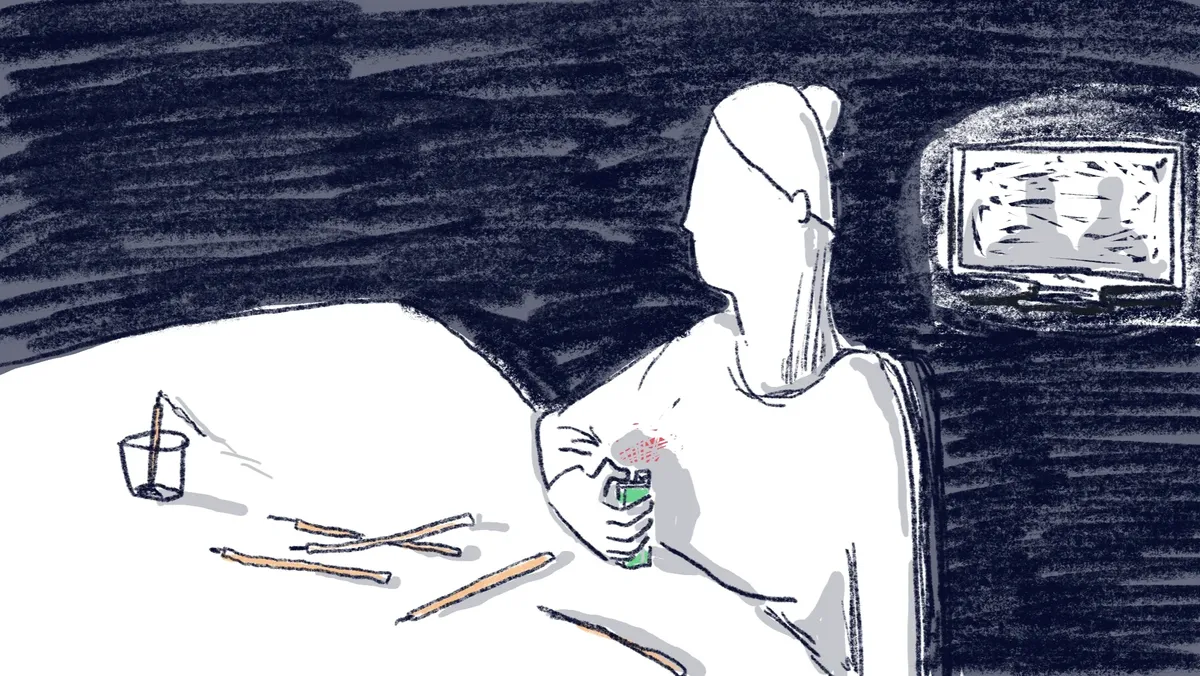
‘The mood in the city is like a raw nerve’
Natasha, 44. The city of Hola Prystan
Military convoys are always moving along the highway above the city. Some of the soldiers remain here. I’ve never seen so many “orcs” (a term used by Ukrainians to describe Russian invaders — translator’s note) in Hola Prystan. They’ve started living in the empty houses whose owners had left the city due to the war. There are so many soldiers here.
I can’t leave the city because my father is very ill. My sister and I keep watch beside his bed in turns. I live alone with two children now. On the first day of the war, my husband managed to escape to Kherson, and then to Odesa, where he’s serving in the territorial defence forces.
I had just quit my job before the war started. I didn’t have enough time to apply for unemployment, so I have no pay check and no state assistance. I don’t take the Russians’ money on principle.
During the first months, my husband transferred money to my card, that’s how we survived. Then, after invaders had cut off communication, we lived using what we had saved up for a while. Now, we have no money but we still have some food left.
From time to time, my friends from the village bring me a big bag of food. The last time, there was fresh fish, pasta, potatoes, onions, and other vegetables. Also, a bottle of red wine, but I will keep it for the day Hola Prystan is liberated.
When I’m given a lot of food, I divide it into several bags equally and take them to my relatives and friends in the city. And they all do the same.
A few days ago, my acquaintances packed their bags in a state of hysteria and left in the direction of Crimea. Turned out they sent their child and grandma there under a wellness programme, and the two didn’t come back.
They waited for their return for a long time, trying to find out any information at all from the occupation “government”, but alas. Eventually, their nerves gave out, they dropped everything and left to search for their child and grandma in different camps. I don’t know if they did find them. There’s no way to contact them anymore.
The soldiers transported our disabled and elderly from the city retirement home to some other place — “evacuated” them, so to say. One of the old men from there is pretty good with tech, he knows how to use a smartphone. So, he texted the employees that they had been placed in tents in some camp in the Krasnodar region [of Russia]. He complained about the lack of living conditions — there’s no healthcare, and basically no food.
We were all shocked, of course. How come? They need round-the-clock care and good nutrition. They advertised this evacuation so much too, promised restaurant-like meals to people.
That old man didn’t get in contact with us again. I have zero clue where they are now. However, Russians loaded all the equipment, furniture, fridges, and TVs from the pension rooms into their [all-terrain vehicles] Urals and transported it to who knows where.

Collaborators have lost their last marbles. One of them kept talking about how the Kyiv regime had disrespected her, then she went and received a Russian passport.
Now that Russians have started abandoning all their supporters, she is on the move, going around and discussing how to ask Zelensky for protection, as if she’s a political refugee. To be honest, we are laughing at her. Don’t even know what will happen to her in the future.
The prices have become outrageous here. Whoever sold vegetables at the market is now rich. I tell them: for this price, eat this food yourself, don’t choke on it.
The war has ended up being an event that exposed the true nature of many — to be honest, I’m shocked by the actual character of some of the people I know that was revealed.
I’m very happy for Kherson, I even shed a tear. I hope we’re liberated soon, too; we’ve been living in this hell for nine months. The mood in the city is like a raw nerve. We only pray that Russian soldiers go back to where they came from.