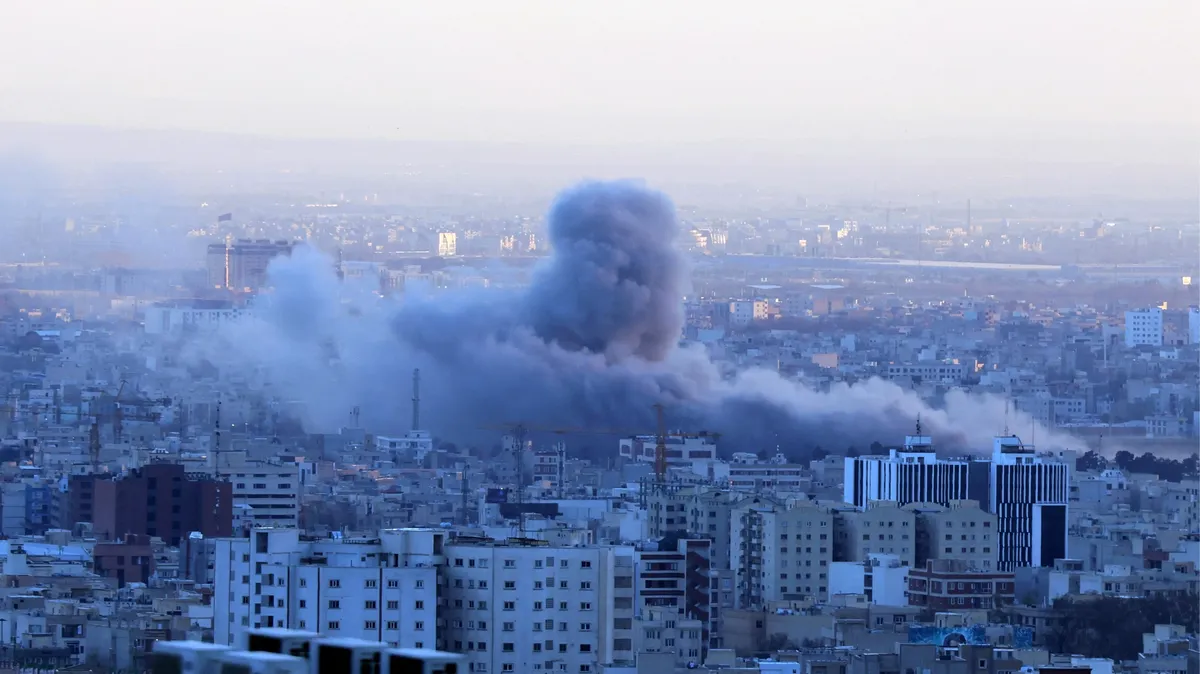
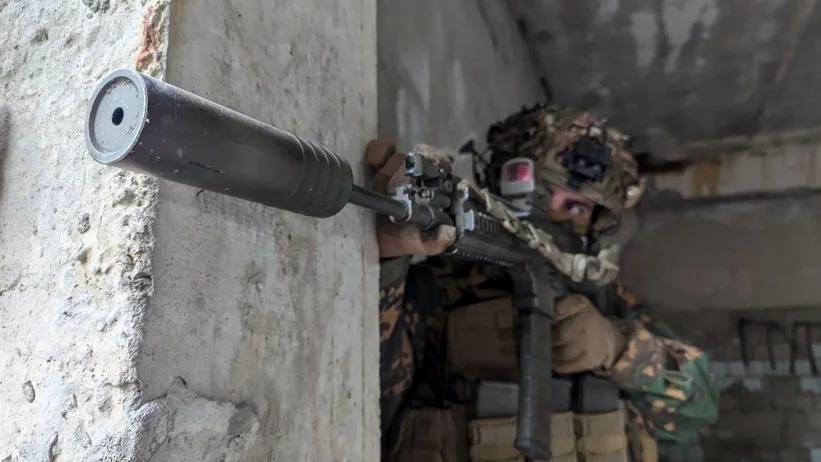
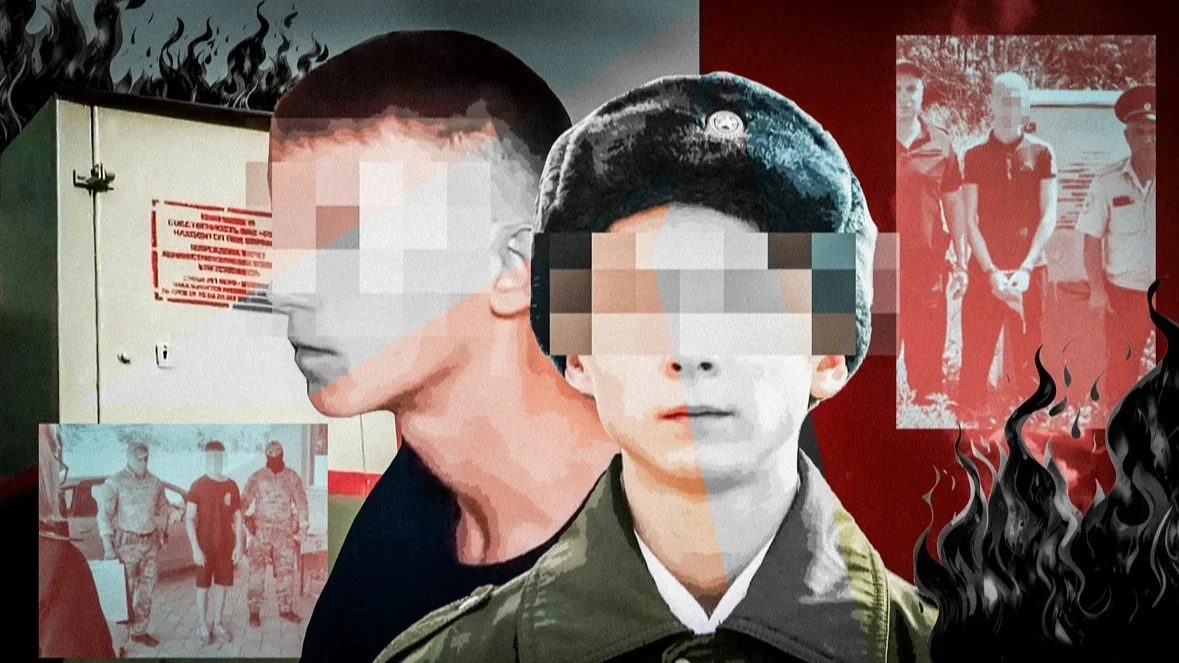
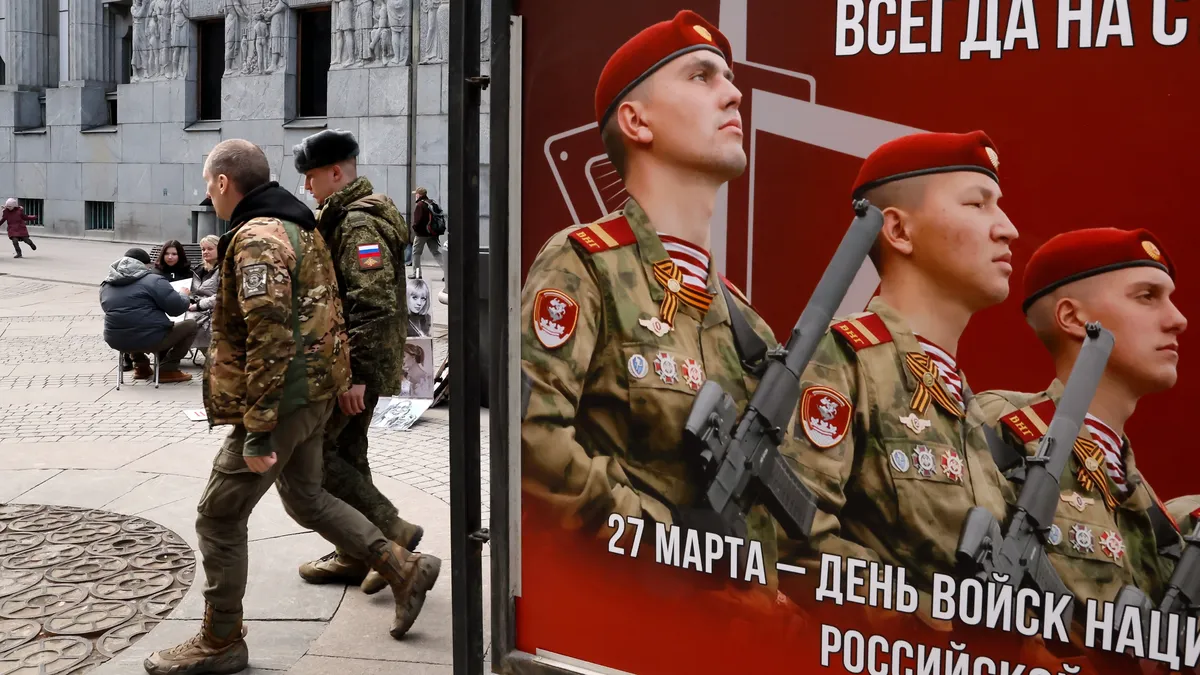
As the US-Israeli war with Iran enters its second month with no obvious exit strategy, Russia has emerged as one of the conflict’s net winners. As well as earning the Kremlin a vital and unexpected financial windfall due to soaring crude oil prices, the war has also ensured that negotiating a peaceful resolution in Ukraine has become even less of a priority for US President Donald Trump than it was before.

Though this sudden change in Russia’s fortunes has been music to the ears of Russian propagandists, who do their best work when global instability and fractured Western opinion allows their narratives to thrive, reaction to the war against Iran in the wider Russian media landscape has actually varied enormously.

Four weeks into the war in the Middle East, Novaya Gazeta Europe explores how Russia’s propagandists and provocateurs have reacted at the four different layers of the Kremlin’s information pyramid.

The balancing act

Unsurprisingly, the Kremlin’s own mouthpieces have been openly critical of the war in Iran, framing the attacks as Western interventionism, a longstanding Russian grievance, and describing them as unjustified and counterproductive. Nonetheless, the Kremlin has been careful to avoid any direct criticism of Trump himself.

Shortly after the war began, Vladimir Putin denounced the assassination of Ayatollah Ali Khamenei as a “cynical murder”, and expressed Russia’s “unwavering support” for Iran and solidarity with its efforts to “resist armed aggression”.

But on 9 March, Putin and Trump held a “frank and constructive” telephone conversation, in which Putin reportedly called only for a swift diplomatic settlement of the war. The contradiction in terms seems to indicate that Russia is stuck uncomfortably between supporting a key ally, and maintaining favour with the White House.
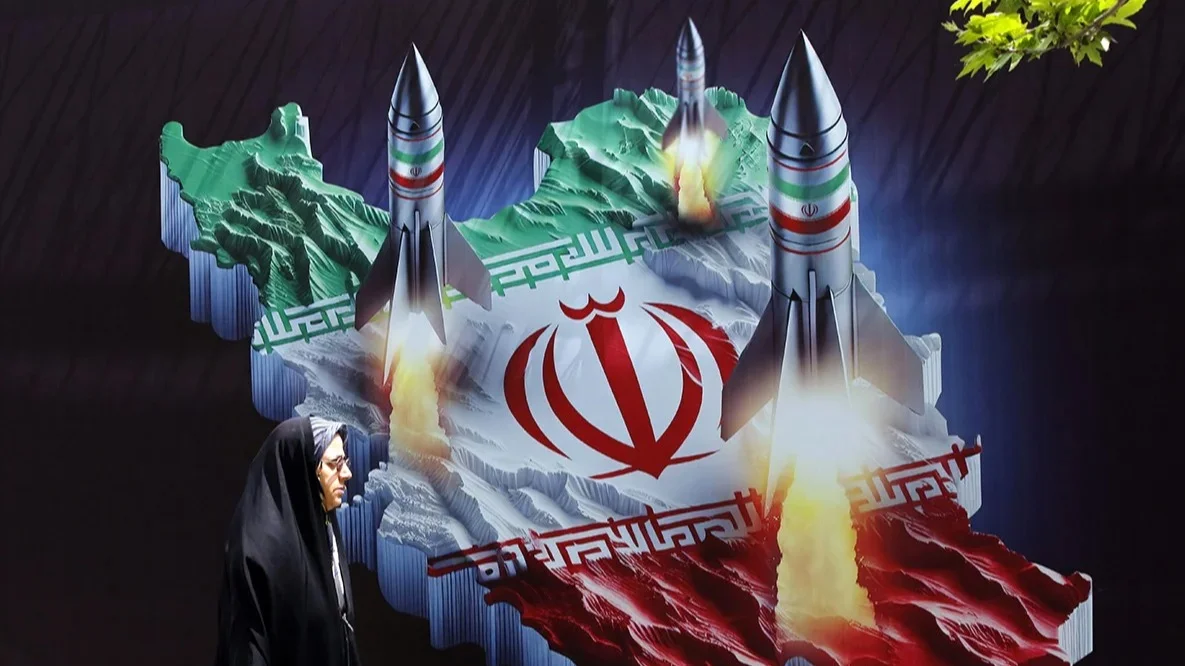
Rather than criticise Trump directly, the Kremlin has preferred to integrate the Iran war into older, broader narratives of Western instability and unjustified aggression. In an interview on 8 March, Putin claimed that the current situation was the fault of “systematic mistakes” by Western countries, and baselessly compared the attack on Iran to Ukraine’s Euromaidan, which Russia has long claimed was a West-backed coup.

By maintaining amicable relations with Trump, Putin hopes to ensure that the US president will continue to look favourably on Russia’s territorial demands in Ukraine, and perhaps even further relieve sanctions on Moscow. But in doing so the Kremlin also hopes to position itself as a stable, neutral mediator in the crisis, as part of its broader strategy of power projection.

This is also evident in the Kremlin’s positioning of itself as a reliable energy supplier at a time of turmoil, which in turn plays into the well-established narrative that Russia’s oil and gas reserves are vital for global energy security. Only now these are being legitimised by the White House’s decision to lift sanctions on some Russian oil — a move the US Treasury claims won’t earn the Kremlin significant revenue, but will serve to reinforce Kremlin propaganda narratives.

Familiar narratives

Reactions to the war in Russia’s traditional media landscape have focused similarly on amplifying the perceived economic and strategic benefits of the war for Russia. However, unlike the Kremlin’s official channels, Russia’s mainstream media outlets have been more than willing to lambast Trump directly.

In fact, much of the criticism of the US war on Iran that has appeared in Russia’s establishment media bears a striking resemblance to that published by Western news outlets, and is focused on Trump’s seeming lack of coherent strategy, vague war goals, and muddled messaging.

ADVERTISING

“To write about ‘Trump’s strategy in the Iran conflict’ is laughable,” wrote state-affiliated tabloid Moskovsky Komsomolets on 16 March, “Trump improvises as he goes along, constantly swings from one extreme to another and issues non-stop statements, each of which nullifies the one that preceded it.”

Needless to say, self-censoring Russian analysts leave out the parallels that could very well be drawn with Putin’s own war in Ukraine.

Just two days later, state-affiliated daily newspaper Izvestia wrote that despite Trump's claims of a swift campaign, “the conflict with Iran is dragging on, and key objectives remain unachieved.”

The fact that these criticisms could just as well have been published in the West points to the fact that, at present, Russian media outlets don’t feel the need to spin events to suit the Kremlin’s propaganda narratives, as the chaotic Trump presidency has already done that for them.

On the other hand, some Russian analysts have developed a more targeted line of attack against the US, accusing it of staging drawn-out negotiations with Iran as a smokescreen, while preparing for new attacks.

In a sense, this version of events contradicts the idea that Trump is an unstable and incompetent actor, but is nonetheless important as it plays into narratives that foment popular mistrust and fear of US and NATO aggression — a key component of Russia’s justification for illegally invading Ukraine.

Needless to say, self-censoring Russian analysts leave out the parallels that could very well be drawn with Putin’s own war in Ukraine, now in its fifth year and hardly a beacon of moral or strategic success. Indeed, Kyiv has repeatedly accused Russia of employing an identical strategy there, convening endless rounds of peace talks while simultaneously pummelling the country’s infrastructure in drone and missile strikes.

But this parallel is not necessarily problematic for the Kremlin, which has already shown itself to operate comfortably amid blatant contradictions. For Russia, the important similarity between the wars in Ukraine and Iran is not that both have failed equally, but that Trump is creating a new world order in which such attacks and invasions become normalised.

Echo chamber escalation

The more extreme pro-Russian talking points reside in state TV and in semi-official and informal Telegram channels, where reactions to the Iran war have taken on a far more incendiary character.

For one, the US-Israeli attacks on Iran are painted as part of a broader global conflict, in which Russia’s “special military operation” in Ukraine is another central arena. For instance, pro-Kremlin Telegram channels have been quick to accuse Ukraine of being complicit in the US war against Iran for having provided anti-drone technology to US allies in the Gulf.

Vladimir Solovyov, Russia’s best-known TV propagandist, has framed the war in Iran as a direct call-to-arms for Russia to strike the West in supposed self-defence. “The current situation is incredibly dangerous,” he told millions of viewers of his evening talkshow on 22 March: “Diplomacy is no more, unfortunately it is dead … The time for terrible actions has come.”

ADVERTISING

Similar conclusions have been drawn by Russian pro-war Telegram channels, such as the popular Dva Mayora, which on 28 March lauded Iran’s willingness to “strike targets in any country it can reach”, and called on Russia to adopt a similar approach in Eastern Europe.

Reactions to the situation in the Middle East on this level often dive into conspiracy theories, such as the supposed involvement of Jeffrey Epstein’s child sex trafficking ring in a US strike on an Iranian girls’ school. With antisemitic flair, pro-war Telegram channels have taken to referring to the US-Israeli alliance as the “Epstein Coalition”, playing into more insidious Russian narratives about Western “moral collapse”.

Russia’s extreme ultranationalist social media landscape does not take its cues directly from the Kremlin, and some far-right commentators have even criticised Russia’s failure to come to Iran’s assistance. Instead, Moscow has carefully curated a media ecosystem in which a variety of views appear to coexist, while still ensuring that public opinion remains pro-regime in general.

The farther each narrative is removed from the Kremlin, the more distant from objective reality it becomes. Nevertheless, these channels are often the Kremlin’s most successful tools of influence, exploiting nuggets of truth (the material facts of the Epstein case, the geopolitical link between Ukraine and Iran) to push the boundaries of accepted fact towards alternative versions of reality.

Disinformation abroad

The final layer of Russia’s information strategy is concerned with spreading Kremlin narratives abroad, part of what analysts refer to as foreign information manipulations and interference (FIMI). Differing from the Russian propaganda aimed at domestic audiences, it primarily relies upon seeding fabricated stories on popular Western social media platforms.

On 13 March, the EU’s disinformation monitoring task force EUvsDisinfo identified three news stories propagated by Russian aggregators since the start of the Iran conflict, which it said focused on “blaming Ukraine and portraying the United Kingdom and the European Union as drivers of escalation.”

One story asserted that Kyiv would stage a “provocation” to regain the West’s attention and to prevent the diversion of Western military aid to the Middle East. Another, propagated through a report falsely attributed to Euronews, claimed that Iranian missiles had damaged a luxury residence in Dubai belonging to a senior figure in the Ukrainian military, feeding a narrative designed to undermine Western support for Kyiv by painting Ukrainian institutions as endemically corrupt.

An earlier analysis by the Dutch cyber threat group SecAlliance identified another eight fake video clips circulated by a Russian FIMI network in the first week of the conflict in Iran. These contained a variety of disinformation linked to the situation in the Middle East, which the group said was aimed at “undermining Western governments, damaging Ukraine’s reputation, and inflaming social tensions in Europe”, once again reshaping time-tested Russian narratives to fit new realities.

SecAlliance also highlighted the speed and efficiency with which Russian disinformation networks adapted their output to the attacks on Iran, which by all accounts caught Kremlin strategists off guard. Across all levels of its operation, the Kremlin’s information ecosystem proved it could be “rapidly activated and redirected to exploit unfolding global events,” SecAlliance concluded.

E pluribus unum

Russia has long understood that it stands to benefit from chaos in the information space, which is why the narratives it promotes outside Russia are not aimed at consistency, but at disruption and destabilisation.

ADVERTISING

In many respects, the response of Russia’s narrative spinners to the war in Iran mirrors that which has been developed over the past decades, with the same tropes and storylines simply adjusted in line with global events. What’s particularly striking this time, however, is that the Trump White House has made that task far easier for Russia’s propagandists.

At the highest level, Trump has seemed more than happy to be courted by Putin while other Kremlin mouthpieces exploit his war for their own ends. Meanwhile, the chaos Trump has sown among his NATO allies allows Russia’s traditional media to report on genuine criticisms of the war’s prosecution and on the fragmentation of opinion in the West.

Most worryingly of all, the overwhelming and contradictory messaging strategy of pro-Russian social media and disinformation campaigns has much in common with the chaotic and manipulative way the second Trump administration communicates its own talking points. At the very least, the latter has provided fertile grounds for the former to take root.

Share
Topics
ADVERTISING
ADVERTISING