Russian state media: death toll following destruction of Kakhovka HPP rises to 53
The number of victims following the destruction of the Kakhovka HPP, located in the occupied part of the Kherson region of Ukraine, has reached 53, Russian state news agency RIA Novosti reports, citing emergency services.
According to the agency’s interlocutor, the rescuers have managed to locate five more bodies over the past two days.
On Wednesday, the regional director of the International Committee of the Red Cross (ICRC) in Europe and Central Asia, Ariane Bauer, said that the ICRC delegation to Ukraine still has not managed to secure access to the left bank of the Dnipro River, the one occupied by Russia, following the flood.
At the end of June, Ukraine’s General Staff reported that the Russian occupation “authorities” were trying to hide the real number of flood victims. To do this, they made a decision to “bury the victims in mass graves without collecting DNA samples and installing any signs at grave sites”.
According to the Ukrainian military, over 60 bodies were found following search and recovery operations on 24 and 25 June.
As of the morning of 22 June, there was information on 18 victims of the flood in the Hola Prystan commune, the local Ukrainian-led administration reported back then. On 20 June, Ukraine’s Ministry of Internal Affairs reported 21 victims, five of which were killed due to Russian shelling.
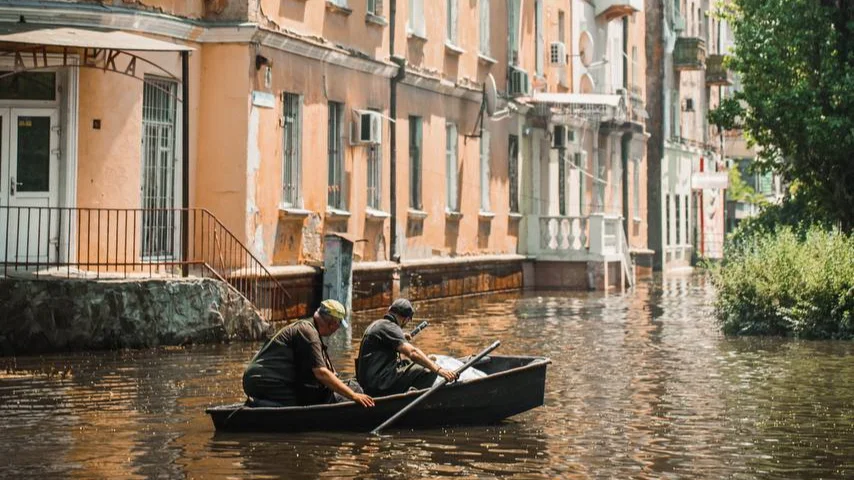
The Kakhovka HPP dam was destroyed on 6 June. Ukraine and Russia accused each other of the act. Researchers with the Norwegian NORSAR institute analysed the data on seismic signals during the destruction of the dam, confirming there was an explosion.
On 8 June, the volunteers that were helping those affected by the flood created a petition addressed to Tatyana Moskalkova, Russia’s ombudswoman, and Alexander Kurenkov, Russia’s Minister of Emergency, asking to be allowed to enter the town of Oleshky and provide help to the locals. On 10 June, it was reported that relatives of at least 395 people from Oleshky, Hola Prystan, Krynky, and Kokhany, located in the Russia-occupied part of Ukraine’s Kherson region, could not find or get in touch with them.