Is Europe sleeping on the roll-out of night trains?
Night trains in Europe are making a comeback after significant route reductions in the 1990s
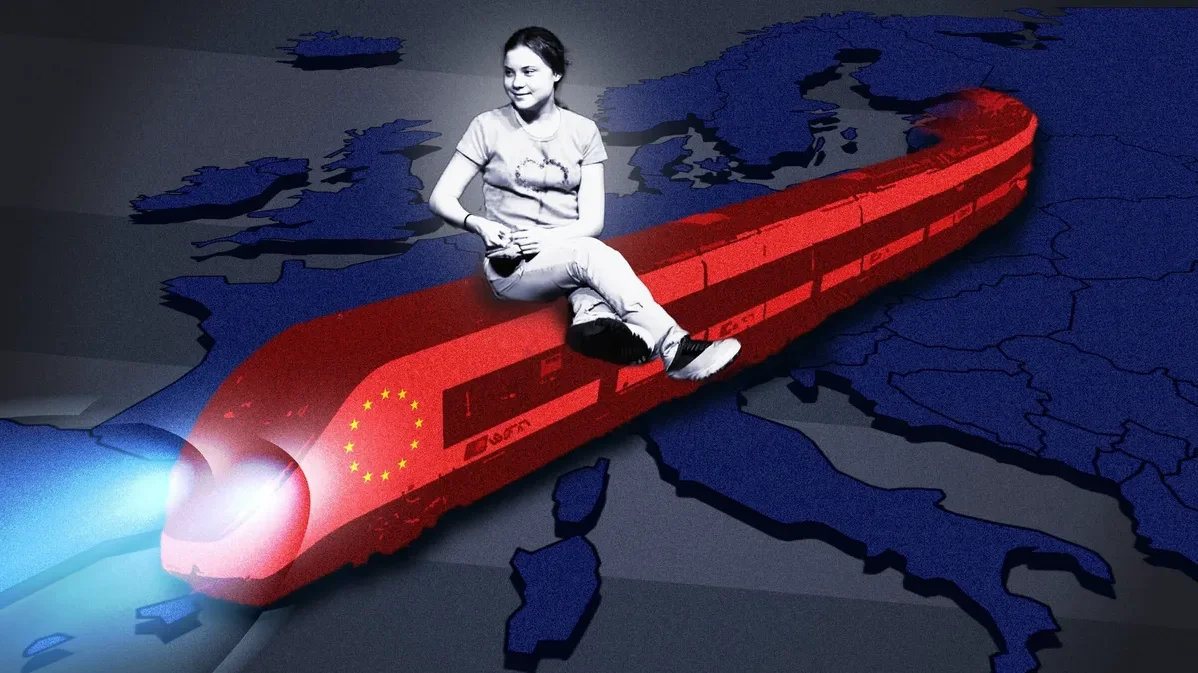
In recent years, Europe experienced a train renaissance. Increasingly, passengers are choosing the rails, and the development of train lines is supported by the European Commission. The eagerly awaited launch of the Brussels-Berlin route via Amsterdam by European Sleeper back in May 2023 highlighted this trend.
Train journeys don’t only offer an environmentally friendly alternative to air travel but can also provide convenience for travellers. Choosing an overnight train can help save on hotel expenses and streamline travel from airports to city centres. However, expanding night train services may present challenges due to bureaucratic processes and the need to ensure a viable return on investment.
An EUobserver correspondent recently embarked on a journey aboard the new night train from Berlin to Brussels, and sheds light on the factors that attract passengers to this route and the obstacles faced by night trains across Europe.
All the compartments in my carriage are occupied. European Sleeper offers three accommodation options.
Almost immediately after we complete this task, conductor Sarah enters the compartment. She tells us about the route and asks at which station each of us will get off. In addition to the final point in Brussels, the train makes several other stops in the Netherlands and Belgium. All of us, except for one passenger who travels to Amsterdam, get off in Brussels.
The train starts moving. Our trip begins.

Green journeys
Boosting passenger traffic on trains is one of the goals of the 2019 European Green Deal, an initiative aimed at cutting greenhouse gas emissions by at least 55 percent by 2030 compared to 1990 levels. According to Greenpeace data, trains emit about five times less CO2 emissions than planes on the same route, and sometimes even less. For instance, a flight from Paris to Amsterdam produces 10 times more CO2 per passenger than the train (119kg CO2 per passenger by plane vs 11.5kg CO2 per passenger by train).
The same study by Greenpeace shows that 34 percent of the 150 busiest flight routes in the EU can be replaced with train journeys under 6 hours. 27 percent of these routes already had direct night trains alternatives in 2021.
To reduce CO2 emissions, some countries are considering reducing domestic flights for short distances. For example, France recently banned domestic flights that can be replaced by a train ride of up to 2.5 hours.
“I take planes only if it’s not possible to get to the place with an alternative way,” says Margo. “There are a lot of reasons why I don’t like planes. They need a lot of fuel so it’s bad for nature. Also I don’t like the process of plane traveling.”
Consequently, launching a new line requires significant investment from multiple stakeholders willing to commit substantial funds to the project.
On the downside, it’s difficult for travellers to plan a trip right now. As Smith notes, you have to put a lot of time and effort into it because there is no single platform for trains to find and buy tickets now (the ones that do exist do not cover all European countries).