A call to arms
Another wave of mobilisation looks even more likely in light of Putin’s landslide ‘re-election’
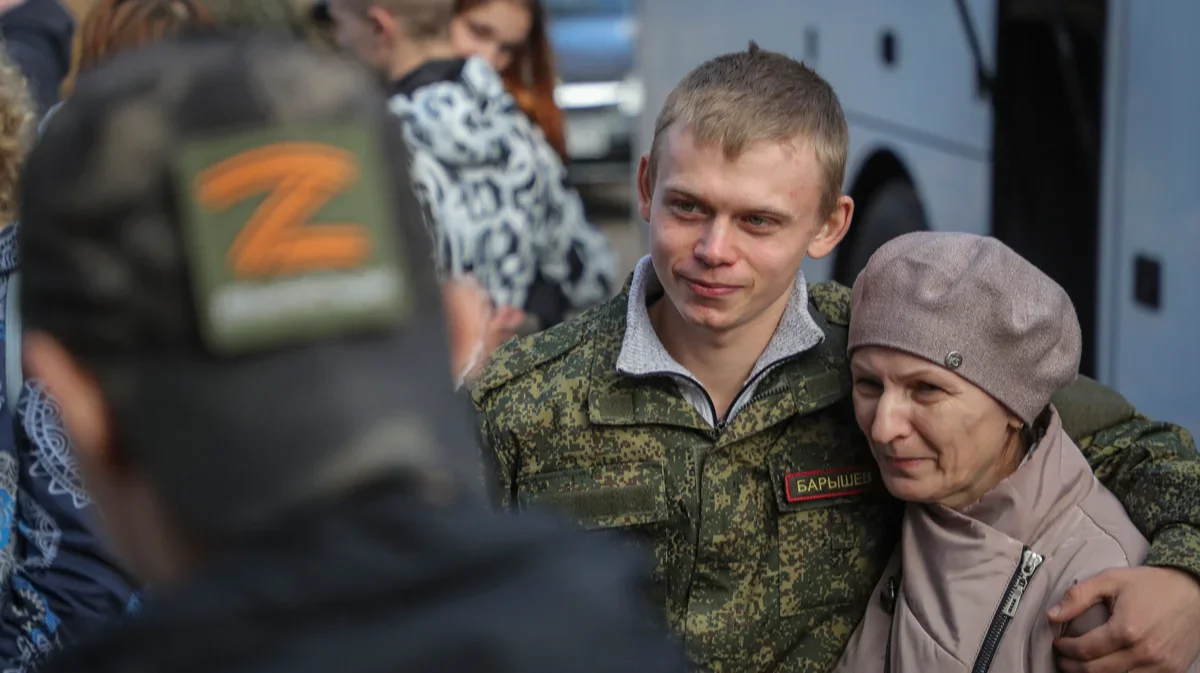
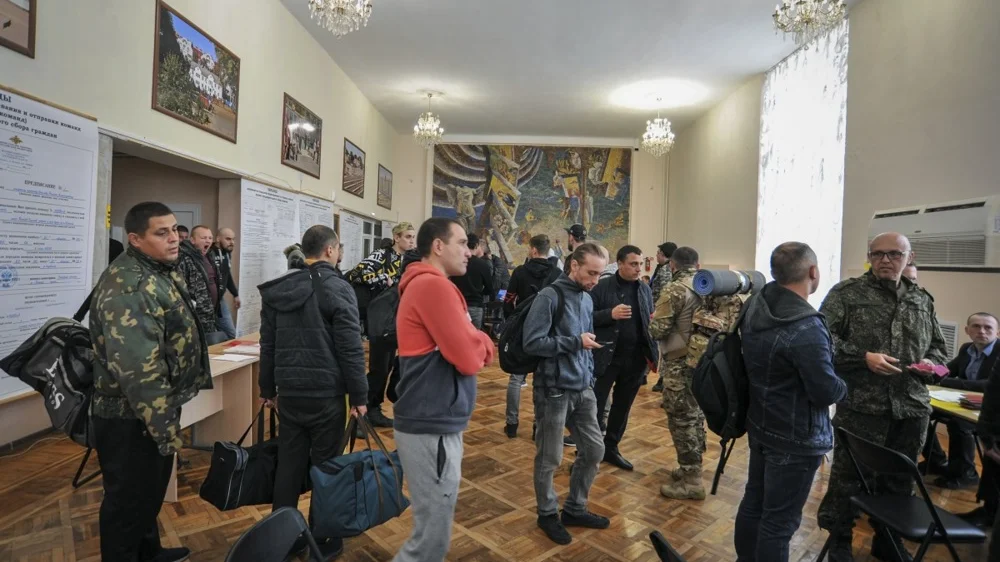
As Vladimir Putin begins his fifth term in office, he faces even fewer constraints on his power when deciding how to progress his war in Ukraine, and many now expect there to be a fresh wave of mobilisation, despite its unpopularity with the Russian public.
The Russian authorities fear mass unrest due to rising inflation, regional discontent and a shared sense of war fatigue, Umland said. “The Russian government is eager to avoid the instability of last June,” he added, referring to the attempted mutiny by Wagner Group founder Yevgeny Prigozhin.
Judging by the situation on the front and mounting Russian losses totalling at least 75,000 dead and 300,000 wounded, a new wave of conscription seems inevitable, Sverdlin said.
“Mobilisation is necessary for a new offensive, since there are not currently enough conscripts,” he said, predicting that a fresh wave of mobilisation could be announced by late April or mid-May.
The Russian army also lacks modern equipment, Mikhailov noted, with outdated Soviet era-tanks such as the T-62 and T-55 still widely used on the battlefield.
“The Russian army is attracting recruits with large financial incentives. Even at a local level, regional authorities are promising hundreds of thousands of rubles to those who enlist,” Sharp said,