The fall of Vuhledar
The Ukrainian strategic defence hub has finally fallen to the Russian military. What happens now?
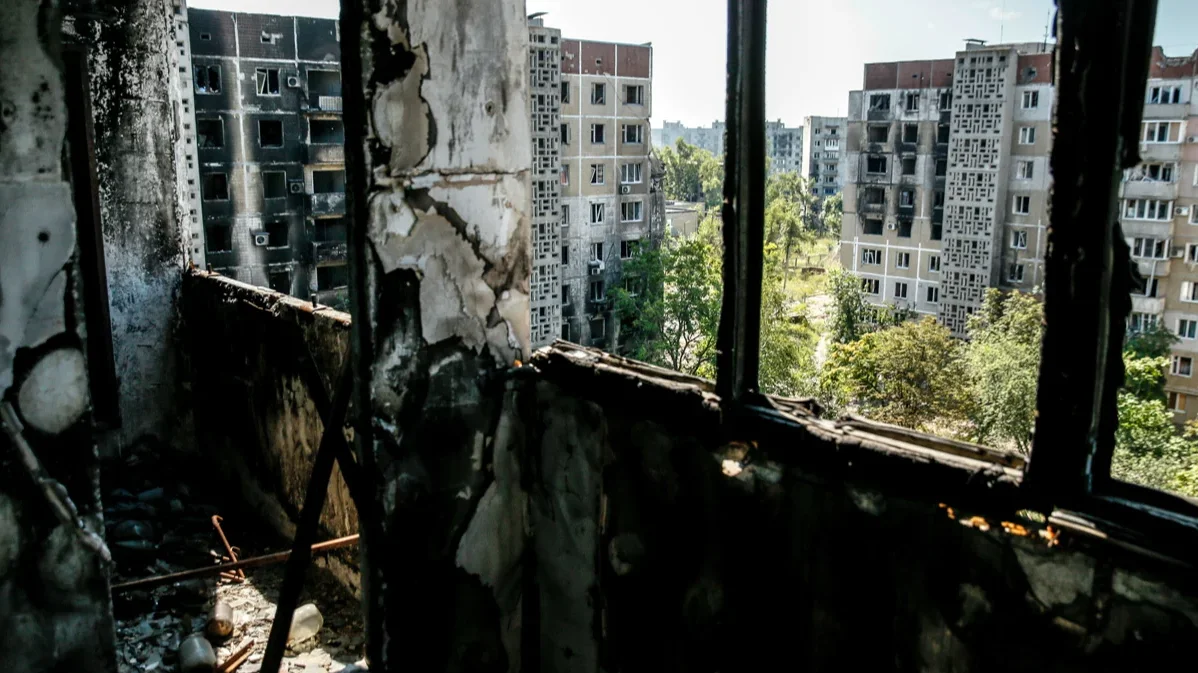
The siege of the Donetsk region city of Vuhledar, which lasted for over two years, has ended with the city’s capture by Russian forces. How might the fall of the strategically important population centre affect the course of the war and which Donetsk region towns might be captured next?
Raising the Russian flag
Russian troops finally entered the centre of Vuhledar, a city in Ukraine’s partially occupied Donetsk region that had been heavily fortified by the Armed Forces of Ukraine (AFU), on 1 October, according to Donetsk region Governor Vadim Filashkin.
Videos posted on Russian Telegram channels show Russian troops calmly patrolling the streets and raising Russian flags on buildings around the town. Vuhledar, which had a pre-war population of around 15,000 people, is now marked as occupied by Russian troops on the DeepState Ukrainian open-source intelligence map.
The Russian Defence Ministry announced that Vuhledar had been “liberated” on Thursday. The AFU’s General Staff has not confirmed the town’s capture so far, but Ukrainian President Volodymyr Zelensky commented on the AFU’s retreat for the first time on Thursday. “These are our people, citizens of Ukraine, so it is right that they withdraw and can preserve themselves. These are absolutely correct steps,” he said during a press conference with NATO Secretary General Mark Rutte in Kyiv.
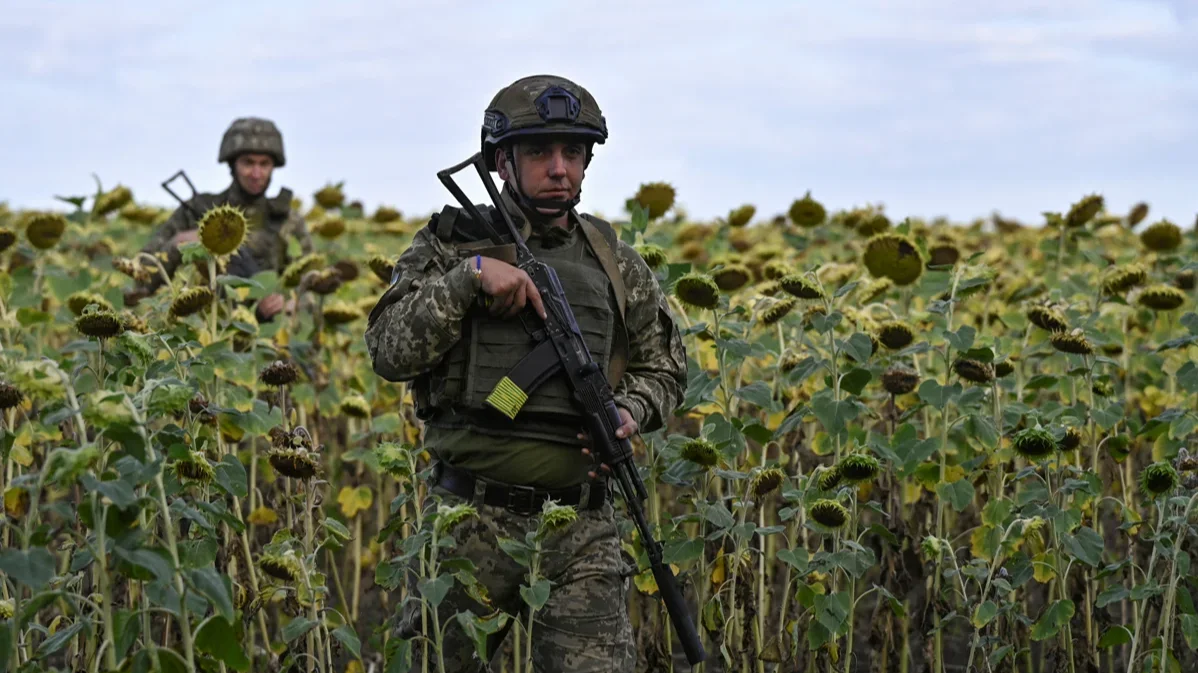
There has been almost continuous fighting in Vuhledar since the start of Russia’s full-scale invasion of Ukraine, with the AFU’s 72nd Mechanised Brigade defending the city since 2022. The town is of great strategic importance as it is located on high ground where two fronts converge — the eastern front in the Donetsk region and the southern front in the Zaporizhzhia region.
“The Ukrainians managed to reliably defend Vuhledar for more than two years.”
Russian forces have been attempting to capture the town since 2022, with even the soldiers of the elite 155th Marine Brigade proving unequal to the task — the brigade was almost completely wiped out in the course of the fighting, according to media reports, losing a huge amount of equipment in frontal assaults.
“The Ukrainians managed to reliably defend Vuhledar for more than two years,” Israeli military expert David Sharp told Novaya Europe. “The AFU had the resources, while the Russians didn’t or carried out mindless all-out attacks where they lost manpower and equipment with zero gains.”
Military expert and AFU reserve colonel Roman Svitan notes that Vuhledar was built on a hill, which allowed the Ukrainians to visually monitor and fire on territory for dozens of kilometres around.
Once the high-rise buildings in the city were either destroyed or very significantly damaged, Vuhledar became extremely difficult to defend.
According to Sharp, once the high-rise buildings in the city were either destroyed or very significantly damaged, Vuhledar became extremely difficult to defend, and once the Russians sealed it off on more than one side, the situation became hopeless and the Ukrainians were forced to retreat to avoid being surrounded. Indeed, Sharp believes the AFU command should have announced its withdrawal from Vuhledar a few days earlier in order to reduce losses.
“Before the latest offensive, the Russians had tried attacking Vuhledar head on, which was extremely inefficient and led to large losses,” military researcher Kirill Mikhailov told Novaya Europe. “The fact that Ukrainian reserves were engaged in other areas of the front meant the Russians could build up a powerful assault group around Vuhledar.”
“The Russians tactic was to approach from the flanks, which posed a threat to AFU supply lines. In recent days, those defending the town were only connected with other Ukrainian units by a single road which was constantly being fired at by the enemy,” Mikhailov continued. “Supplies and logistics come with huge risks in those conditions. In that sense, the situation was reminiscent of the defence of Bakhmut, which was also almost completely surrounded. At that time, many Western analysts criticised AFU command for not giving the order to withdraw earlier.”
Seriously injured AFU soldiers whom it was impossible to evacuate had to remain in Vuhledar, according to some Ukrainian sources on social media. These troops will have most likely been taken prisoner by Russian forces and will now have to be exchanged.
Command errors
The AFU faced the threat of encirclement once the Russians had outflanked them, according to Sharp, which may only have happened due to errors in Ukrainian command, with the Russians achieving significant superiority in terms of manpower and equipment.
“The situation faced by the Ukrainians defending Vuhledar was sad but predictable,” Svitan told Novaya Europe. “Rearguard units covering the withdrawal of the main forces still control a small part of the city. Once the Russians were close to surrounding the town, a decision was made to withdraw the defence units in a controlled manner, for multiple reasons.”
“The men sent to cover the flanks at Vuhledar were taken from the ranks of poorly trained and poorly motivated conscripts. They couldn’t contain the Russian attacks and the front collapsed.”
“First, errors on the part of the AFU command meant there was a shortage of weapons, especially anti-personnel mortar shells and cluster munitions. The Ukrainian Defence Ministry didn’t foresee what was going to happen and failed to set up an ammunition supply line. Second, the men sent to cover the flanks at Vuhledar were taken from the ranks of poorly trained and poorly motivated conscripts. They couldn’t contain the Russian attacks and the front collapsed.”
Ivan Vinnik, the commander of the 72nd Mechanised Brigade, was removed from his post on 29 September.
Towns under threat
“Ukraine has lost an important symbol,” Sharp continues. “But I won’t say the capture of Vuhledar is a strategic success for Russian forces just yet. It’s important that the AFU soldiers defending Vuhledar avoided being surrounded. There is information that the AFU has prepared strong defensive positions north of Vuhledar. Those positions now simply need to be manned by the required number of personnel. If they can keep the Russian army where they are, the loss of the ruins of a town might not turn out to be fatal for the situation at the front.”
“I won’t say the capture of Vuhledar is a strategic success for Russian forces just yet,” Sharp says.
“But we have to factor in the advance of Russian troops from the south towards the town of Kurakhove, which is also coming under attack from the east. The Russians have great potential for gaining territory there. Kurakhove, like Pokrovsk, is an important Ukrainian defence hub, much more significant than Vuhledar was.”
The loss of Vuhledar is unlikely to lead to serious change on the front line, according to Mikhailov, as new defensive lines have been built northwest of the town. Vuhledar’s strategic importance lay in the fact that from there the AFU could shell a railway line carrying trains towards the Zaporizhzhia region and on into occupied Ukrainian territory.
If the Russians can push the AFU further back, logistics in the so-called “land corridor” to Crimea will be relatively safe. This would make the Crimean Bridge a less vital transport artery for the Russians supplying the southern front in the Zaporizhzhia and Kherson regions.
“Vuhledar was important because it was a bridgehead from which AFU artillery could shell the Volnovakha railway junction and branch line,” Svitan confirms. “Now the only way to reach the land corridor to Zaporizhzhia and on to the Kherson region and Crimea will be with expensive and scarce HIMARS shells and missiles, making the loss of Vuhledar a serious setback for the Ukrainians.”
Mikhailov says the AFU are also facing difficulty around Toretsk, where the Russians are close to seizing the village of Niu-York, and Chasiv Yar, where bloody battles are ongoing. The front line near Pokrovsk looks ominous for the Ukrainians, as the Russians are practically on the outskirts of nearby Myrnohrad. The situation around the town of Selydove is extremely dangerous. The Russians couldn’t take the town in head-on, frontal assaults and are now trying to approach it from either side. To capture the settlements, it looks as if the Russian forces will resort to the tried and tested tactic of outflanking the Ukrainians.
Svitan is confident that Pokrovsk will withstand any frontal assault by the Russians. However, the Russians could try to encircle the city and cut the Ukrainians off that way, though Svitan thinks that is unlikely to happen this year.
Svitan believes Ukrainian forces will now retreat several kilometres along the highway west of Vuhledar to higher ground in the village of Bohoyavlenka, where defensive positions are already being prepared. Svitan believes that in the coming month, the Russians will continue to put pressure on Kurakhove, outflank it, cut off Ukrainian supply lines, and, should they have sufficient manpower and resources, force out the garrison defending the town.
Forecasting the weather and the US election
“The Russians are taking a breather after an active summer offensive campaign,” says Svitan. “The Russian army doesn’t have the reserves to attack everywhere. Moscow is trying to use these last dry days to make further advances to improve its position as much as possible before the autumn-winter period, when fighting will become more difficult. Once the heavy rains begin, the only way to move equipment will be on roads that have long been mined and shot at by the Ukrainians. The Russians hope that hostilities will be frozen soon. They need a break to prepare for the spring-summer campaign next year.”
“Moscow is trying to use these last dry days to make further advances to improve its position as much as possible before the autumn-winter period, when fighting will become more difficult.”
The muddy season, which should start within the month, will slow down the Russian offensive, according to Mikhailov. The Russian army may face serious problems with disrupted supply lines, equipment will get stuck in the mud, and the AFU already actively uses drones to attack vehicles delivering ammunition, food and other necessary goods.
“Rain can complicate fighting outside populated areas,” Sharp adds. “There will be a strategic pause during which both sides can lick their wounds, regroup and bring up reserves. However, the weather doesn’t play a decisive role when assaulting positions using small groups of soldiers, so Russia might continue to attack even in heavy rainfall.”
Sharp says the most anticipated event at the moment is next month’s US presidential election, which will determine just how much support Ukraine can count on Washington for, and which may alter the course of the hostilities.
In the meantime, “the Ukrainians are trying to replenish the ranks of the AFU via mobilisation, with varying success to date,” Mikhailov says. “It’s difficult to train up fighters in an extremely tight time frame. People in Ukraine think the eight weeks of training new recruits are given is not enough. The Russian army sometimes only allocates a few days to training. We are seeing drone operators or personnel from other branches of the armed forces, such as the Navy, being transferred to the Russian assault infantry. That suggests Russia lacks the manpower to turn a tactical victory into a strategic success and make a major breakthrough in Ukrainian defences. We can predict the war of attrition and a slow Russian offensive will go on.”