No safe harbor
Moscow has targeted more than 120 anti-war Russians abroad since 2022. Here’s who is most at risk
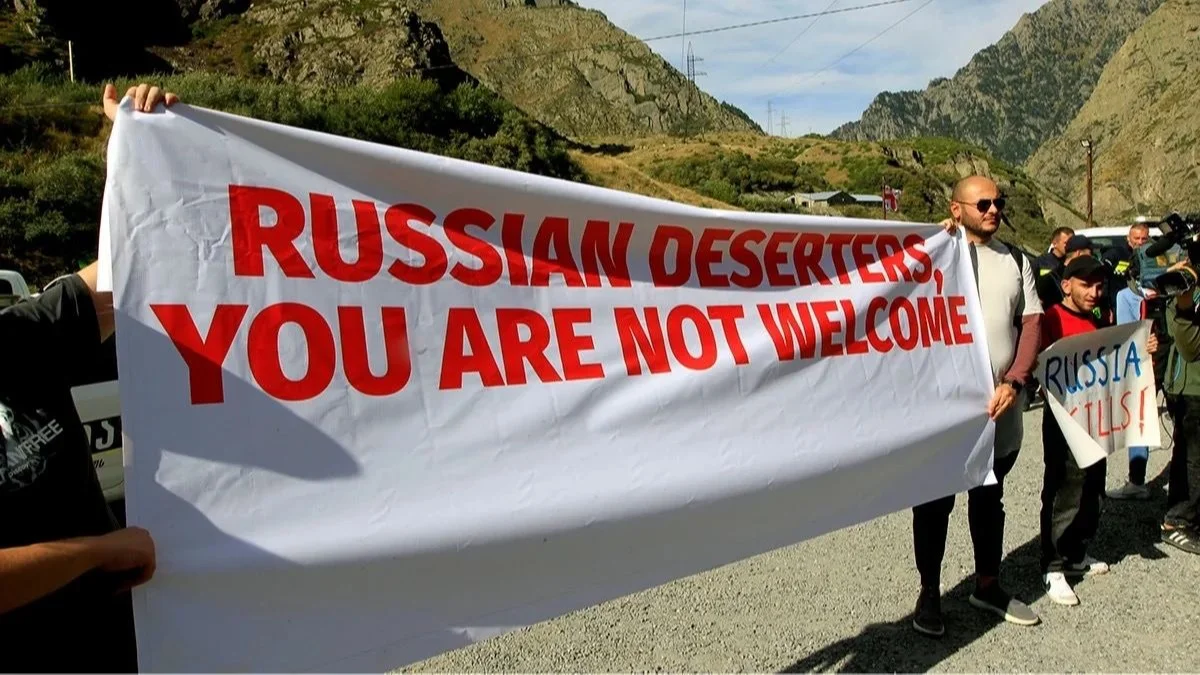
Since Russia launched its full-scale invasion of Ukraine in 2022, the Kremlin has pursued its critics not only at home but across the globe. Activists, journalists, army deserters, and human rights advocates who fled to Georgia, Kazakhstan, Armenia, and even as far as Venezuela and Vietnam have found themselves detained, expelled, stripped of residency, or handed back to Russian authorities through a mix of legal pressure and backroom arrangements. Novaya Gazeta Europe has documented at least 122 publicly confirmed cases — a count that covers only what could be verified, and almost certainly understates the true scale.
In March, authorities in Kazakhstan opened a criminal investigation into forged documents, with dozens of military-age Russians listed as witnesses. Human rights advocates warned their goal could be to lay the groundwork for mass deportations.
Kazakhstan had already seen several high-profile expulsion cases earlier this year. One of them involved a 25-year-old IT worker named Alexander Kachkurkin. In January 2026, Almaty police charged him with two misdemeanour violations in quick succession: one for jaywalking and one for smoking a hookah indoors. Within hours, he was expelled to Russia and arrested on the plane as it landed in Moscow, facing charges of treason for allegedly sending money to Ukraine.
According to Novaya Gazeta Europe's tally, at least 122 publicly documented cases of pressure against anti-war Russians have occurred since Moscow launched its full-scale war in Ukraine. These cases have targeted activists, journalists, human rights advocates, and military deserters. The count includes only episodes confirmed by media reports, human rights organisations, lawyers, or the individuals themselves, and excludes physical assaults.
The year with the most cases has been 2023.
"In 2022, immediately after the invasion, many countries — including CIS members — adopted a wait-and-see posture, trying to weigh the political benefits and gauge the war's outcome," says lawyer Anastasia Burakova, founder of the Kovcheg project, which support Russian emigrants in need. "By late 2022, the situation began to shift, starting with Kyrgyzstan and then Kazakhstan. These countries concluded that Russia was not losing, and that their relationships [with Moscow] needed to be maintained — including this kind of cooperation, in exchange for their own benefits."
One landmark case from 2023 involved Pyotr Nikitin, who had lived in Serbia since 2016, held permanent residency, and co-founded the anti-war Russian Democratic Society. After a trip abroad, he was denied re-entry to his adopted home country. Nikitin refused to leave the airport transit zone, and after a full day, managed to overturn the ban. But the episode sent a clear signal: pressure on Russian emigrants had become more systematic, reaching not just new arrivals but people who had managed to build lives in their adopted countries.
The most dramatic cases — extraditions (10 documented instances) and abductions by security forces (5) — generate the most headlines, but they represent only the tip of the iceberg. The bulk of documented episodes involve quieter forms of coercion: entry bans (43), detentions followed by release (38), revocation of residency permits (15), and prolonged legal limbo. In practice, it’s precisely these measures that leave emigrants in a state of chronic vulnerability.
Who is most at risk?
Political and anti-war activists are the most frequent targets of Russia’s transnational repressions, accounting for 52 cases. Journalists come next (23), followed by deserters and former security personnel (15). Cases involving artists, musicians, and human rights defenders are less common — unsurprising, since activists tend to operate publicly and are therefore more visible to authorities.
However, according to Burakova, some of the most vulnerable groups are deserters and former security officers. For deserters, the issue is that conscription alone does not automatically qualify someone for asylum; they have to prove a real risk of being forced to commit war crimes. Many soldiers also lack international passports and cannot even reach a safe country to apply for protection.
Former security officials and military officers are “objects of special attention and special arrangements”, Burakova says. She puts the most high-profile cases in this group, such as the 2022 deportation from Kazakhstan of former Federal Protective Service officer Mikhail Zhilin and the 2023 deportation from Poland of former FSB officer Emran Navruzbekov, carried out before his appeal could be heard.
The geography of repression
The largest number of known cases occurred in Georgia (40), Armenia (21), and Kazakhstan (16). Together, these three countries account for 63% of all documented episodes.
These countries were also among the primary destinations for Russians who fled soon after the full-scale invasion began. They were easy to reach quickly, required no visas, and in some cases no international passport at all. But that same proximity to Russia turned out to carry heightened risk. In CIS countries and Georgia, Russian authorities retain functional channels of influence through security cooperation, data sharing, migration procedures, and informal political ties.
Yet repression has not been confined to Russia's neighbors. Cases of politically motivated persecution have been recorded as far afield as Venezuela and Vietnam. In Venezuela, blogger and anti-war activist Leonid Zakamalddin from Chelyabinsk has been held for nearly two years after being arrested at Russia’s request.
Even within the most affected countries, the nature of transnational repression varies considerably. In Georgia, the primary tool has been entry denials at the border, typically without explanation. In roughly half the known cases, the person barred from entry had already been living in the country for some time and was simply returning from a trip abroad. The political motivation is sometimes barely concealed — an entry ban may follow within days of someone being designated a "foreign agent", or after a publicly visible act such as organising a petition. In other cases, no obvious political trigger is apparent at all.
In Serbia, pressure more often involves migration status: residence permits are not renewed, documents are revoked, or individuals are barred from reentry after travel. These actions are typically justified as “national security threats”, though some have been successfully challenged in court.
In Armenia, many cases involve short-term detentions based on Russian extradition requests. Lawyers and rights groups often secure release, but individuals can remain stuck in legal limbo for long periods due to international wanted status.
Kazakhstan and Kyrgyzstan are the least safe of all. Known cases have included detentions on Russian requests, extradition attempts, and outright deportations. In 2022, both countries seemed relatively hospitable to political emigrants. But by 2023, Kyrgyzstan had seen its first forced removal — the abduction of anarchist Alexey Rozhkov. Pressure there extended beyond formal extradition procedures to include arrests and the disruption of political activity by Russian emigrants.
Another illustrative case is the story of Lev Skoryakin. He was detained in Bishkek in June 2023 on a Russian wanted notice; Kyrgyz prosecutors subsequently refused to extradite him, and an immediate handover appeared to have been averted. That autumn, however, Skoryakin vanished. He was later reported to have been secretly transferred to Russia with the assistance of local security forces.
In Kazakhstan, extradition attempts and politically motivated deportations were, until recently, frequently blocked through the intervention of lawyers and human rights groups. The expulsion of Alexander Kachkurkin was a turning point, however, and the situation has now shifted.
Since 2025, hundreds of Russians have also been deported from the United States and Europe, including anti-war activists forced to return to Moscow. These cases were excluded from the count, however, as they occur without Russian government involvement and cannot readily be classified as political persecution.
How transnational repression works
One of Russia’s central instruments of transnational repression is the Interpol system, which, despite having mechanisms in place to prevent abuse, is still exploited by Moscow. The Kremlin also makes use of the CIS interstate wanted persons system, which has no meaningful filter for political motivation.
But formal legal procedures are far from the only tools in use. In many cases, persecution combines official channels with extralegal methods: a person may be placed on a wanted list, then detained on a minor infraction, then placed under threat of extradition. This is frequently accompanied by grey-zone tactics running in parallel: surveillance, intimidation, pressure through intermediaries, attempts to lure someone to a meeting, or physical handover to Russian agents.
This pressure frequently intensifies after Russians visit their country's consulate. In several documented cases, an attempt to renew a passport or seek consular assistance proved to be the moment after which a person faced new document problems or escalating persecution. In Vietnam, Sergei Pavlov visited the Russian consulate general in Da Nang to register his newborn daughter — and received a deportation notice instead. He had previously been fined in Russia for making anti-war statements.
The number of cases in which Russian authorities actually succeed in securing extradition or deportation on politically motivated grounds remains relatively small, Burakova notes. "Russian authorities are economical with repression," she says. She estimates that roughly 1,000 people currently abroad are facing politically motivated criminal cases back in Russia.
Abroad, persecution rarely takes the form of a headline-grabbing extradition or abduction. More often it looks like quiet, sustained pressure: an entry ban, a document revoked, a status denied, months of legal uncertainty. But often, that’s enough to keep an individual under constant strain, to intimidate the broader emigrant community, and to suppress any public dissent.