The drama of eternal recurrence
How does the state’s appropriation of Victory Day help the Kremlin to justify the war in Ukraine? Sociologist Svetlana Stephenson explains
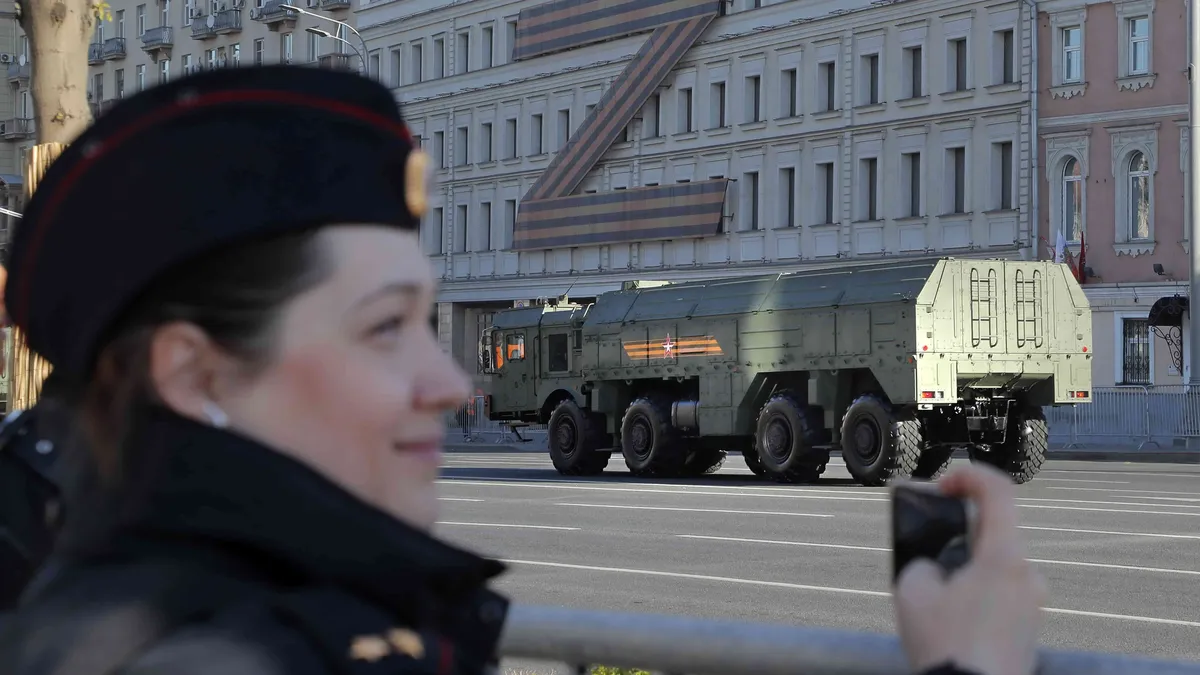
While for Europe and most of the world, Victory Day is an occasion to mourn the fallen and commemorate people’s heroic deeds, the Russian regime has increasingly distorted this meaning. The state’s appropriation of this day, which began long before the war in Ukraine, has now led to the victory over Hitler being used in effect as one of the regime’s prime sources of legitimacy and an important tool to justify the war in Ukraine.
Sociologist Svetlana Stephenson discusses how even purely bureaucratic practices, such as obligatory weekly patriotic training in schools — the so-called “Important Conversations” — serve the cause of Kremlin propaganda and how a future new Russia will need to handle Victory Day in a way that does not encourage or promote public acceptance of war as a norm.
It is this moral capital that Putin has now completely destroyed. Russia will long be associated with the war of aggression that he unleashed in Europe.
A cult of war
The universal message of Victory Day had started to fade from public discourse long before Putin annulled it with his invasion of Ukraine — but the process has accelerated since 2014. For the state, victory in the Great Patriotic War was not a prologue to a better world, but a way of elevating Russia to the status of a great power. The regime has appropriated the victory, and official speeches hardly mention anymore that it was a joint achievement by all the peoples of the USSR. And now it turns out that the Allies were Nazi collaborators that actively contributed to Germany’s military buildup, as the head of the Russian Security Council, Nikolai Patrushev, stated in a recent interview.
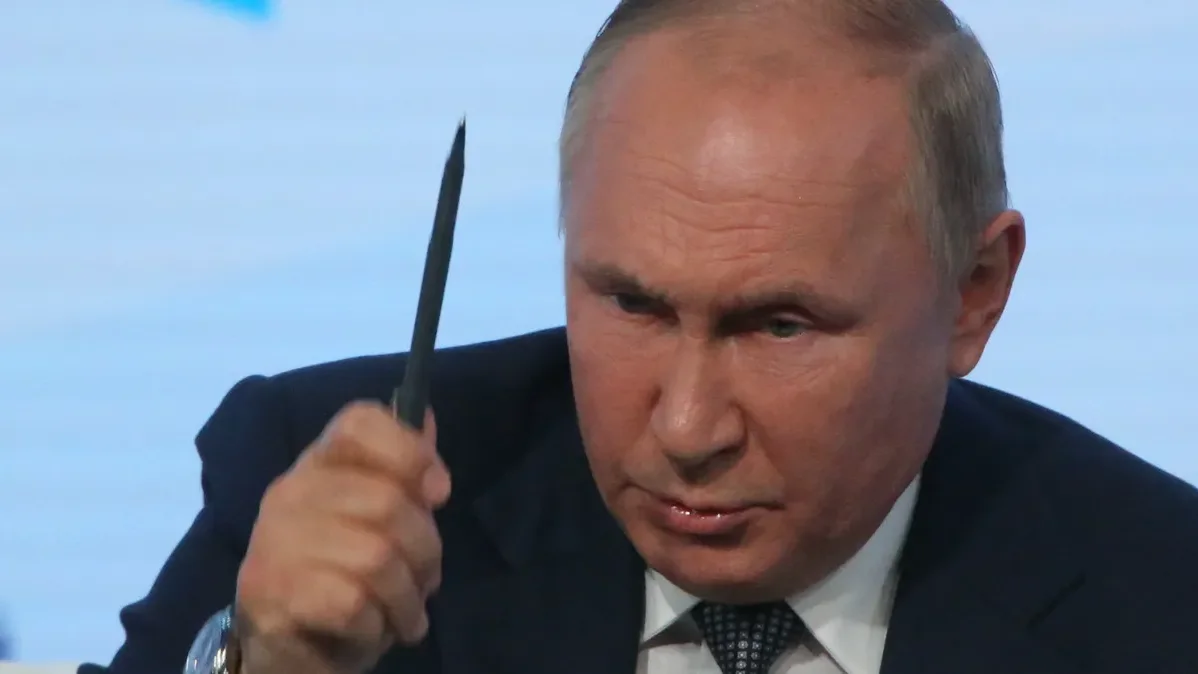
Unbridled triumphalism (known as “pobedobesie”) and pride for the state have become the chief messages of Victory Day. The war has been incorporated into the ideological concept of a “thousand-year Russia”, in which a strong state has historically enabled Russia to retain its immense territory and repel the attacks of its enemies. In this vision, the universal victory of humanity is replaced by the victory of the “Russian world”, and the Russian people are declared genetically destined to “defeat Nazism”. The calling of the Russian people is not to protect humanity from the “brown plague” of fascism, to use a Soviet expression, but to “protect brothers in blood and spirit” in a sacred mission, as Patriarch Kirill put it last August.
The victory over Hitler becomes an archetypical Russian victory over evil — a timeless phenomenon that does not need to be fleshed out with historical detail. Nazism becomes what sociologist Emile Durkheim called a “sacred evil”, radically different from the ordinary evil amenable to perception and analysis. This evil is associated with powerful global — and even otherworldly — forces.
War becomes eschatological in character. In the Soviet version of history, the USSR fought against a particular state — Hitler’s Germany — and its allies. Nowadays, however, Russian propaganda and top politicians, including Putin, explicitly say that Russia is fighting satanism. Ex-president Dmitry Medvedev, in his increasingly unhinged manner, now calls on Russians to “stop the supreme ruler of hell”.
These activities teach the public: we embody goodness — yesterday, today, and tomorrow. The “others” (the “Nazis”, the West) are evil, we have defeated them in the past and we will always defeat them.
We are incapable of committing war crimes, bombing cities, killing civilians. We are successors to the victories of our grandfathers, and their moral light shines on us.
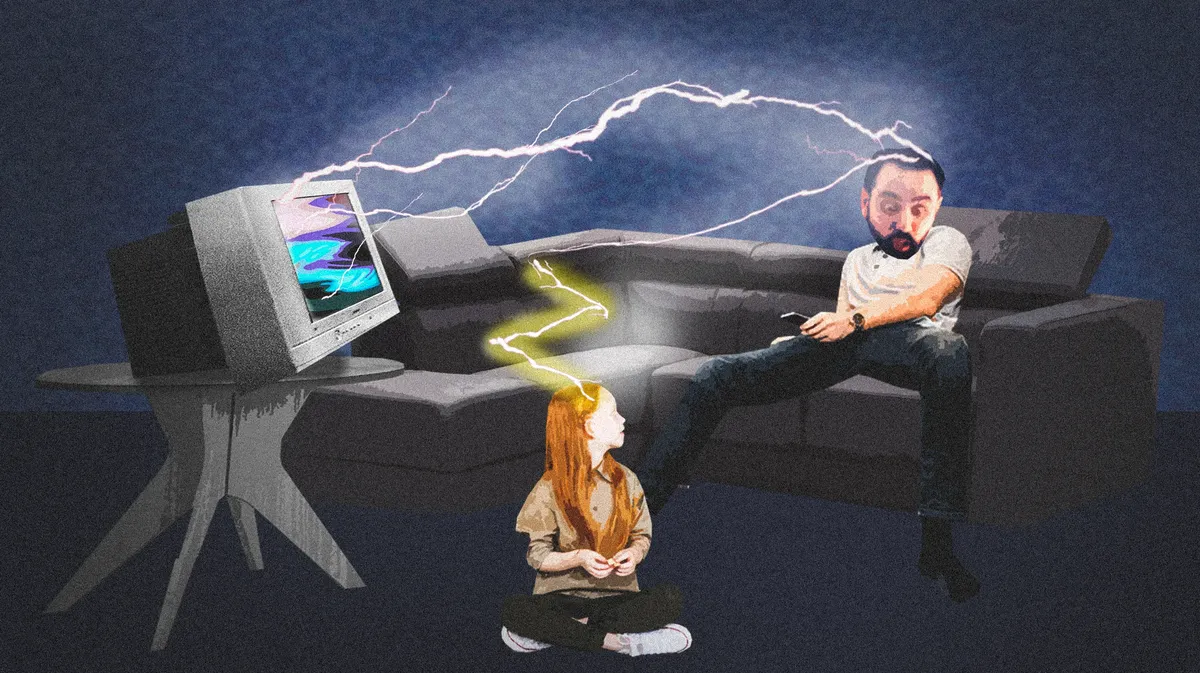
Thus, the progressive meaning of victory as something that paves the way to a better world has long been forgotten. Russia does not share a common future with the rest of humanity. We have “our own, different future”, as Putin has said. Russia is fighting for itself. “The battlefield to which fate and history have called us is the battlefield for our people, for the great historical Russia”.
Meanwhile, war has turned from something to be avoided at all costs into part of daily life. What will be considered victory in the war with Ukraine? The authorities keep silent. Russia is now living in the world of Orwell’s 1984, where Oceania is constantly at war with Eastasia or Eurasia, and these wars have no discernible rationale.
Once this war — and hopefully the regime that unleashed it — comes to an end, the memory of the great victory over fascism in 1945 should be an occasion for society to reassess history and reflect on the fact that any war is a tragedy for nations and a crime for those who unleashed it.
The lessons that the world tried to learn from WWII — that human rights and freedoms must be universal, that ethnic and ideological grounds for war are unacceptable — must now be learned in modern Russia, drawing on the tragic consequences of Putin’s rule. Instead of indulging in victory parades, performative heroics, and “we can do it again” incantations, Russian society should agree: “Never again”.