Thirty killed as Russian military transport plane crashes into cliff in annexed Crimea
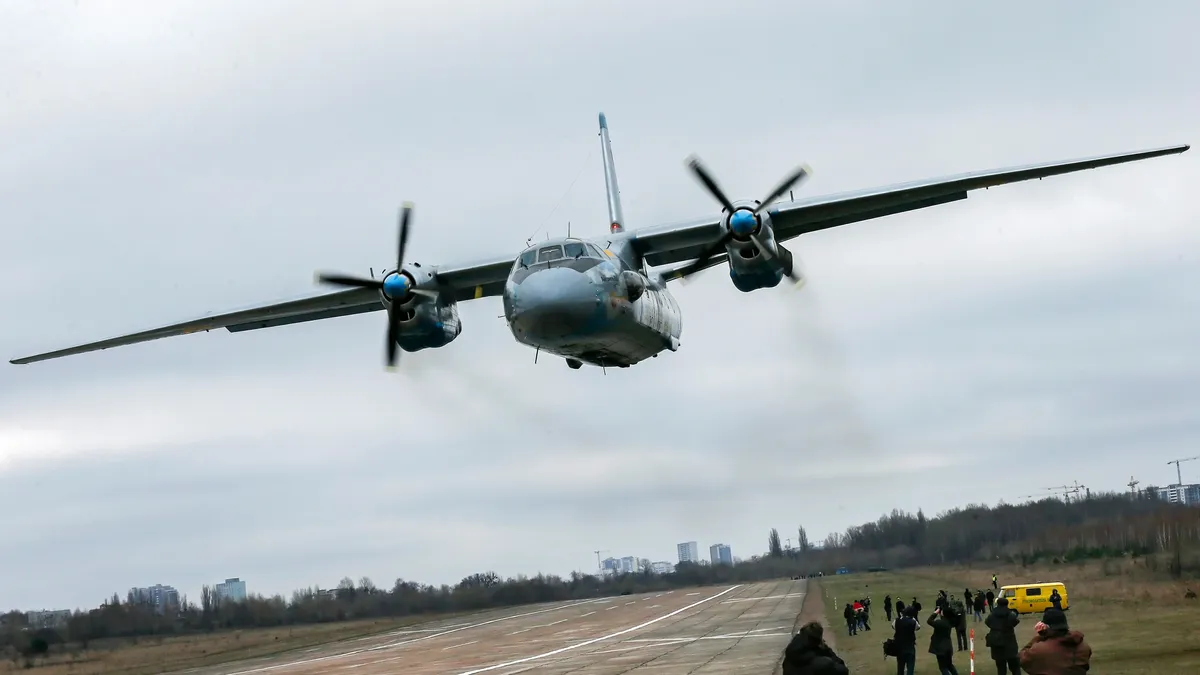
Thirty people have died after a Russian military transport plane crashed into a cliff near the city of Sevastopol in occupied Crimea on Tuesday evening, Russia’s Investigative Committee announced on Wednesday.
Contact with the plane was lost on Tuesday evening as the Antonov An-26 carried out a routine flight over Crimea carrying 23 passengers and 7 crew members, according to Russian news agency TASS. The aircraft subsequently crashed into a cliff in the peninsula’s southern Bakhchysarai region, killing all those onboad.
Investigators have opened a criminal case for “violation of flight rules or rules governing flight preparation”, TASS added. Preliminary reports from Russia’s Defence Ministry suggested that the accident was caused by an unspecified “technical malfunction”, and that there was no evidence of a strike on the aircraft.
The An-26 is a twin-engine turboprop plane that was produced in the Soviet Union between 1965 and 1989 and which can be used to transport up to 40 troops in its military transport configuration.
Ukraine’s main military intelligence agency has previously targeted An-26s while on the ground at airbases in Crimea, including two that were destroyed by Ukrainian drones in September. They are widely used by Russia for transporting personnel and cargo to Ukraine.
Ageing Soviet aircraft are still widely used for both military and civilian purposes in Russia, where Western sanctions have complicated acquisition and maintenance of more modern Boeing and Airbus aircraft, as well as the development of new domestic alternatives.
In July, 43 people were killed in Russia’s Far East when an Angara Airlines Antonov An-24, a similar aircraft to the An-26, crashed in the Amur region, which Russia’s aviation authority concluded had been caused by a faulty altimeter setting.
Reuters reported in January 2024 that Angara Airlines and Polar Airlines, both based in Siberia, had appealed to the Russian government to extend the service life for their An-24 and An-26 aircraft, due to sanctions preventing the acquisition of more modern planes.
“By 2030, a quarter of these planes will be written off. It is expensive, it is impossible to afford without state support. We are today working in a market in which there are no alternatives to the An-24 and An-26,” Sergey Zorin, deputy CEO of Angara Airlines, told Reuters.